



Sinéad O’Connor died on July 26th 2023 at her home in London. She was 56. The cause of death was confirmed as natural causes – COPD and asthma.
After the recent autobiography and the remarkable documentary Nothing Compares, which finally began to give her the retrospective recognition she was long owed, you’d have hoped her story wouldn’t end so soon. She was 56. It felt like a theft.
After the recent autobiography and film celebrating the courage and conviction she showed in the face of the horrible things she had to endure, you’d hope that her story wouldn’t end tragically. She was ahead of her time always.
Her debut album The Lion and the Cobra arrived in 1987 when she was 20 years old – a shaved head, a voice that could do things most singers spend a lifetime attempting, and a complete refusal to be packaged into anything the industry recognised. I Do Not Want What I Haven’t Got followed in 1990, and ‘Nothing Compares 2 U’ made her the most famous Irish artist on the planet. She was at the absolute peak of commercial viability, and she spent the next several years dismantling that position with precision, because she couldn’t have kept it without compromising what she actually cared about.
Thirty years ago, she tore up a picture of the Pope on Saturday Night Live during a performance of Bob Marley’s ‘War’, replacing the lyric “racism” with “child abuse.” This was 1992. The Catholic Church’s systematic abuse of children in Ireland was not yet public knowledge in the way it would become. She knew. She was pointing at something real and was ridiculed globally for it. NBC received 4,500 complaints. Frank Sinatra said he’d like to “kick her ass.” The following week at a Madison Square Garden tribute concert for Bob Dylan, she was booed off the stage.
♡ Nialler9 is independent and reader-supported. Support us on Patreon →
O’Connor was a maverick artist, who never compromised her personal integrity or artistry, who was often ridiculed, and deemed the mad Irish woman.
She was right. She was right about the Church, right about the Magdalene laundries – which she had direct experience of as a teenager – right about Ireland’s fight for abortion rights, right about the treatment of minorities, right about American militarism when she refused to allow the National Anthem to be played before her concerts. Every cause she was mocked for has since become mainstream or been vindicated by the evidence. The price she paid for being right too early was her commercial career, which she never particularly wanted anyway.
“I’m not a pop star. I’m just a troubled soul who needs to scream into mikes now and then.”
What gets lost in the retrospective reclamation of Sinéad O’Connor – which accelerated significantly after her death – is how consistent she was. This was not someone who stumbled into activism or made provocative gestures for attention. She was a protest singer, first and foremost, in the tradition of the artists she loved – Bob Marley, Bob Dylan, the tradition of Irish song that uses music as a vehicle for truth-telling rather than entertainment. ‘Famine’, from 1994’s Universal Mother, is six minutes of reckoning with colonialism and cultural erasure that remains one of the most serious and unsparing pieces of music ever made about Irish history. It took Kate Nash covering it in 2026 to remind a new generation it existed.
She converted to Islam in 2018 and took the name Shuhada’ Sadaqat, though she continued to use Sinéad O’Connor professionally. The following year her son Shane died by suicide at 17. She had spoken openly throughout her life about her own mental health struggles, her diagnosis of bipolar disorder, her experiences of trauma and institutional abuse. She wrote about all of it in her autobiography Rememberings, published in 2021, which finally told her story in her own voice and terms.
Sinead O’Connor was a protest singer, first and foremost. RIP.
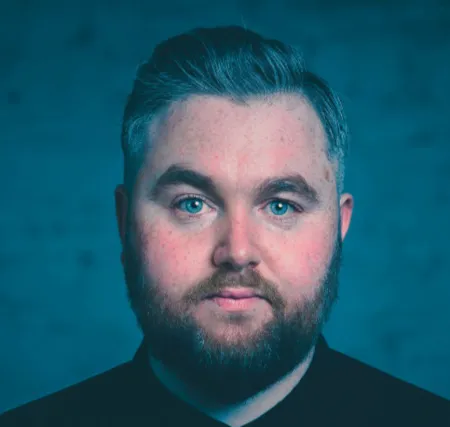
Niall Byrne is the founder of the most-influential Irish music site Nialler9, where he has been writing about music since 2005. He is the co-host of the Nialler9 Podcast and has written for the Irish Times, Irish Independent, Sunday Times, Totally Dublin, Cara Magazine, Red Bull and more. Niall is a DJ, co-founder of Lumo Club, event curator, Indie Sleaze club promoter, and producer of gigs and monthly listening parties & events in Dublin.