


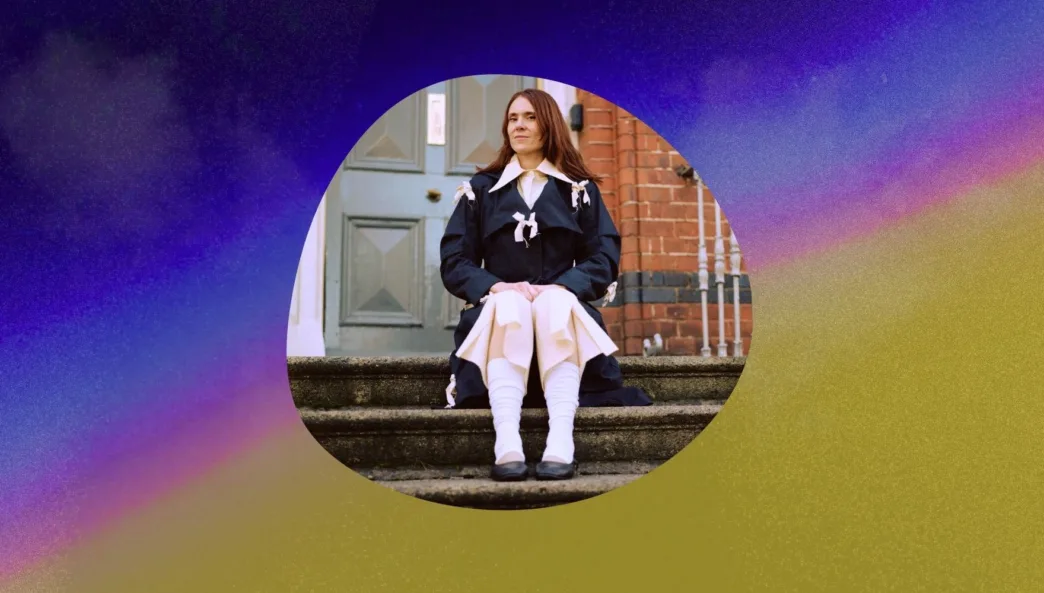
Kate Nash is one of the most interesting artists working in British and Irish music right now.
You might know her from ‘Foundations’, the debut single that went to number one in the UK in 2007, or maybe winning a BRIT Award for Best Female Artist in 2008 or the excellent Netflix TV show GLOW on Netflix about female wrestlers.
But the Kate Nash of the last few years is an advocate for artists who kicks against the pricks of the music industry and the world at large.
In the last couple of years alone she has given testimony before a UK parliamentary select committee about the economics of touring, losing £26,000 on a European tour leg and covering those losses by selling photos of her arse on OnlyFans.
She’s travelled around London on a fire engine visiting the offices of Live Nation and Spotify as part of her Butts for Tour Buses campaign. She is a patron of the Music Venue Trust speaking up for grassroots venues. She’s been one of the founding members of the Featured Artists Coalition since 2009. She played the Trans Mission show at Wembley. She’s been to Leinster House. She also released trans ally anthem ‘GERM‘.
♡ Nialler9 is independent and reader-supported. Support us on Patreon →
Nash grew up in North Harrow going to Irish dancing at weekends, listening to Christy Moore and the Dubliners at home, spending summers in Ireland.
Last month, Nialler9 debuted her cover of Sinead O’Connor’s Famine – a song that serves as an introduction to her dual Irish English heritage.
So there is a lot to talk to Kate Nash about.
Listen on Apple | Android | Patreon | Pocketcasts | CastBox | Stitcher | Spotify | RSS Feed | Podlink
* Support Nialler9 on Patreon, get event discounts, playlists, ad-free episodes and access our Discord community.

Niall: You’ve been so busy lately and it’s kind of inspiring, a lot of the things you’ve been doing. In fact, I think you’ve been such an advocate for artists lately, especially in the last few years. You released “Famine” recently, the cover of Sinéad O’Connor. I wanted to start with that and talk about why, from everything in Sinéad O’Connor’s catalogue, you chose “Famine”? Most people go for “Black Boys on Mopeds” at the moment.
Kate Nash: I know it’s a big one to start. I’ve been working on music exploring my Irish heritage, something I’ve been working on for about 10 years. I realised that the tin whistle was my first instrument. I was born and grew up in London, but my mom’s from Dublin and my family are from Athenry, Galway, Headford, Lisheenkyle. We spent every summer in Ireland. I went to an Irish Catholic school and we had a lot of Irish families around us growing up. I had this realization that that was such a big part of my music history and I should explore that in my artistry. It just took a while to find the right collaborators and someone who understood that. I was in a recording session with my producer not long after Sinéad had died, and I’d been revisiting her catalogue. I just thought, “Oh my God, ‘Famine’ is such an amazing song. This should be in schools.” It’s crazy that I learned more about our history through this song than I did at school or even at home. I found it really inspiring. My producer suggested we should cover it. I thought that was audacious, but I decided let’s actually do that.
I wanted to put my own verse in because I felt like acknowledging—I mean, Sinéad’s third verse was about statistics that were relevant to the time she wrote them. I was not really sure what the statistics were in the present day, and I didn’t really want to—I felt I could leave that out and maybe put something in from the English side to acknowledge my dual nationality and make sure that it feels related to the present day.
It gives a reason as to why I’m covering it and what I’m trying to say about England in the present day. We started working on it, and I played it to my soul. It felt really right. At first, I was a little bit unsure if I could cover that song, and then I thought actually I should, because the more people that cover that song, the more that education gets spread. I always come back to that phrase; it’s so important in Sinéad’s words: “And if there is ever going to be healing, there has to be remembering and grieving so that there can be forgiving. There has to be knowledge and understanding.” I thought there’s something nice about revisiting my own history, starting with Ireland and England’s history and honoring Sinéad. Also, it being so political and a cover. I think a lot of Irish artists are very political, and the history of Ireland is extremely political. My household was very political growing up, and that tradition with folk music, that songs are passed down through covering and sharing, made it feel right.
Going straight for “Famine” instead of feeling like I couldn’t was important. Like “Germ,” which I wrote last summer, these untouchable subjects are scary to dive into, but I feel it’s an important time to do that. If you approach things with respect and the patience to understand, then that’s an important evolution for me as a human. I’m questioning the way that we communicate online and the way we share information, and the toxicity of social media and how so much misinformation is spread. I feel like saying, “Actually, take a seat, have a listen, educate yourself.” Social media is not the platform you think it is, and perhaps there are better ways of sharing things you care about, and to me, that is through art.
Niall: It’s interesting. Since Sinéad passed, because she was such a truth-speaker and ahead of her time—
Kate Nash: She was so ahead of her time.
Niall: Just before she died, the documentary that came out really underscored that, and then obviously her biography as well. You’re like, wow.
Kate Nash: Brilliant. I remember just before all that happening and her dying, it was like she was so right about so many things and people weren’t ready to hear it.
Niall: That was the thing. I think another thing that’s happened is not only yourself, but a lot of Irish artists here have been inspired by Sinéad. I have a theory that Sinéad’s death has galvanised a lot of Irish artists to speak up more than they ever were because there’s been so much solidarity shown. There’s so much artists speaking up and protesting at festivals like South by Southwest about the US military, showing solidarity for Palestine. Did you feel that when she passed as well?
Kate Nash: I just felt so sad that she didn’t get to have the moment of being around for that revival. So often women don’t get that. I’m so happy when I see women later in life getting celebrated for what they did when they were underappreciated at the time. I always think so many women do die in music. I was very sad that she didn’t get to see how—I’m sure she knew she was important—but like you said, she was ahead of her time, so people weren’t ready for a lot of what she was doing. Whereas now everyone’s kind of doing what she was doing.
I feel like growing up from 18 in the music industry, I remember feeling like I relate to things with Sinéad. She said she was a protest singer and she got confused as a pop singer because she had a hit. I don’t feel like I’m a protest singer really, but I do connect to that because I feel like I snuck into pop with Made of Bricks because of MySpace and I had this hit. I feel like I’m not really for that world. I don’t really fit in there. A lot of that world made me very angry. So, I relate to Sinéad’s experience there in a different way, in a different time.
I’m not as famous as her and not experiencing some of that reaction that she did. But I did grow up calling myself a feminist and journalists would be like, “Oh, no other artist will say they’re a feminist in 2007.” Publicists would jump on and say, “She’s not going to answer that.” And I’d be like, “Yeah, I am. I am a feminist.” My mom being Irish and political, it was so natural to me to talk about politics, but it wasn’t necessarily in my music. Whereas the older I’ve gotten and the more noisy the internet is, the more I feel like this is not healthy. The best place as an artist that you can speak your mind is in your work. So you just have to calm down and get offline more so that you can be of some use. Everyone’s shouting into the void at the same time. It’s terrible and it’s making everybody extremely unhappy and anxious and not really achieving much. The people that own these companies are the bad guys. I don’t know why we think we can use these tools to benefit ourselves when actually they’re owned by people that are like, “No, we are manipulating you and you know it.”
Niall: Yeah.
Kate Nash: And we’re like, “Yeah, we know, but please, here’s my Instagram post anyway.” We’ve been told our personal brand is the most important thing, and now we’re all like, “Why are you treating me like a product?” It’s a weird time.
Niall: It’s a weird time. It’s also really hard to avoid the political systems and things that are happening around the world, because you used to be able to ignore that in music easily and at the moment you certainly cannot. It would feel disingenuous to do so in many cases. A lot of people do, but a lot of people now don’t. They are speaking up for what’s going on and all the things that are happening that are clearly wrong. You’re right—you can put things on social media, but that won’t change anything. The discourse is obviously toxic in terms of the binary nature of things.
Kate Nash: We need conversation. We need to be meeting people and seeing both sides of things. We can’t even call ourselves humans if we’re not able to do that and understand complexities.
Niall: As a musician you do have a platform and a profile where people actually come together in a room and watch you play music. That’s an amazing thing that’s happening and why people are realizing this connection is something that could inspire hope or feeling rather than just a post. Then you have—obviously “Germ” is about trans rights—and then you see the opposite, an Irish artist like Róisín Murphy, who I used to respect and adore, now going the opposite way and saying very troublesome things online, just very misguided and damaging. You’re just like, how does it get to this point? How do we get to the point where somebody who had a majority queer audience is now being so negative and somehow blaming trans people for being responsible for her ability to speak freely?
Kate Nash: Well, that’s what’s really sad because it’s such a small percentage of the population that is trans. As I say in “Germ,” using feminism to erase the rights of others is just inherently un-feminist. It’s not feminism to trample on vulnerable people’s rights. Feminism has made mistakes in the past, and the role of a modern-day feminist is to ask what were some of the issues in the last movement and how do you keep progressing. Isn’t that the point? It’s so scary to me, things like Twitter and rabbit holes online, because people might have an opinion or say something that’s offensive. If you say it online, you’ll be attacked. That’s a really scary feeling. You can have a physical reaction as if you’ve actually been attacked in real life.
Then if somebody joins your side and says, “Hey, you’re right, we’ve got your back and you’re so brave for speaking out,” if you’re only listening to that, it’s really bad for your mental health and critical thinking. I worry that the feeling of being attacked online by the “woke warrior” is sending people further down the rabbit hole to become even more right-wing and backed into their own corner. There’s a lot of false information. It’s really sad to me that you’d put that on trans people who are so vulnerable and being blamed globally for so much stuff that’s not their fault. They’re just trying to live their life, get healthcare, and be trans in the world without being attacked for it, and that’s becoming increasingly harder. I don’t see how feminism aligns with hurting trans people at all. It doesn’t make any sense to me. I understand wanting to have critical conversation, but the fixation on us—
Niall: Yeah.
Kate Nash: —and the healthcare system, and who’s actually trying to take everybody’s rights away? Looking at it with a critical mind of where are the risks and where do we need to have each other’s backs, rather than just saying, “No, I’m blaming these vulnerable people.” It feels like a madness of the internet that’s driving people down these rabbit holes, and it quietens me.
Niall: I feel like the idea of critical thinking is something that we really need to improve in terms of learning, and that applies to all of these conversations, but also AI and how people understand the world. We should be teaching critical thinking more readily in schools.
Kate Nash: Well, should politics just be taught at school now as a subject everybody has to learn? Everyone’s becoming politicized on social media, but a lot of people have never been taught anything about it. They’re taking their feelings from social media and that’s it.
Niall: And they make changes to these apps all the time and you don’t even realize the tiny little tweaks are affecting our minds and how we interact and how we become socialized. They’re working with neuroscientists.
Kate Nash: It’s really evil. It’s like Star Wars evil. It’s like someone’s writing a sci-fi comic book and they’re like, “Let’s make evil people try to mind-control the entire world.” You’re just like, “Wait, it’s so stressful.”
Then you put becoming an emerging artist into that, and you’re told you have to use TikTok and Instagram to make a living for yourself or a name for yourself. Then you look at the reach that you have—for example myself—and you’re like, “Wow, all these people who are following me and all the people I follow, I will never see their posts, they will never see my posts.” The algorithm dictates so many things that are so problematic for us.
Niall: It’s so against you. It’s fighting the creative nature of artistry as well.
Kate Nash: And I don’t think you can fight it. I’m trying to focus my efforts on making changes to the law in the UK because I feel like I can make an impact. I’m getting invited into Parliament in England, in Belfast City Hall, and in Dublin. I feel like there are some MPs that care. I’m trying to get their attention and change legislation because these tech companies and the music industry are not going to change anything. They profit way too much money.
They’ve already proved that they don’t give a s*** because they made all the terms and conditions themselves. They’re going to do the same with AI, the same that the music industry did with streaming, where they’re like, “We’re not going to get involved until…” and then they’re going suddenly be involved and sign terms and conditions under NDAs. No one’s going to know what the truth is, and then they’re going to stay really rich and everybody else is going to get f***** over. That’s what’s going to happen.
Niall: It’s being erased. I think the landscape right now is pretty bleak for new artists and very difficult. Obviously, there are loads of different reasons for that, and you’ve been covering a lot of them and advocating for change. You did the UK Parliamentary Select Committee recently. What was that experience like? What were the main issues you were talking about? Mostly about touring, right?
Kate Nash: Yeah, so that was specifically about touring in the EU post-Brexit and talking about what could be more helpful for musicians. There are a few things: processing times on things like A1 forms, reducing cost of carnets, and increasing the limits to merch that you can bring into Europe so you can profit more on the tour to make it viable. It was really scary to be in Parliament in front of a committee like that, but ultimately I felt really proud to be invited. I feel like I can use my experience 20 years into my career. I do have confidence with public speaking and I’ve been wading into issues where I feel like I can be politically challenged. I did want to get across that there’s not just one problem. Even if the deals in Brexit improve, that doesn’t mean it’s going to change things for all artists, because some artists still won’t even be able to do tours at home. There’s not one problem the music industry is facing; there are so many and all of them need to be improved in order for things to get better.
Niall: You’ve been very frank about the money you’ve spent and lost on tours as well, which is really useful for other artists to see. I’ve seen another band do it this week, Los Campesinos!, sharing their breakdown of everything it cost for their US tour. It’s just really useful to see that. It can be empowering to see when you think you’re at a certain level and then you’re spending 100 grand and how much everything costs. In terms of yourself, you went without a manager for a long time, so you must have learned a lot doing that. You have a unique perspective on all of it.
Kate Nash: Being on a major label, getting dropped, being independent for 12 years, going through 20 managers, getting stolen from, going to court, then getting a job as an actress on Glow and working with 14 other female comedians who are actors as well. They shared so much. Being in a union as an actor—if we were working overtime, these girls knew exactly what extra money they were getting. They knew their rights. I was like, “Oh my God, I don’t know anything as a musician.” We’re not taught to know. Everybody else does a job that takes care of a thing and then you’re just like, “Let me sign off on this and not understand it.” I think it really opened my eyes to sharing our wages. It was a feminist tactic used in negotiating deals. I would share what I was being paid even though I was in a higher tier, and that helped other people. Imagine if a festival had the lineup and then you had everyone’s fee written under it.
You’d see the disparities and who’s getting paid the most. Are women getting paid less? Are black people getting paid less? Are gay people getting paid less? There’s power in sharing what you’re earning. In music, you’ve been encouraged to be a bargaining chip. A booking agent will be like, “I’ll give you this if you give me that artist.” But no one’s telling each other anything because if you tell anyone something, you’re failing and it’s embarrassing. I was on tour in America and I just thought, this is so hard. I’m bleeding money. I also need a photographer at shows to make it look like I’m having the best tour, because that’s how I market myself. If I don’t do that, what’s the point of even doing it? I just felt like such a liar because I am having a good time and I love my job, and it is a success, but no one knows how much it’s costing me. People will look at that and think, “How is she doing that? I must be such a failure if I’m not able to do that.” I just felt bad because I know loads of other musicians that have had really hard times, and I just wanted to be honest.
That experience on Glow really informed that decision to just say the truth about my finances and how much I was losing. That’s why that post got thousands of shares, because so many musicians felt they didn’t have to put themselves on the line or be embarrassed about their own failures. I know people that have sold furniture just to try and pay their band. I think we need to start being really honest because it’s empowering to recognize that you’re not a failure—the music industry has failed you. The music industry has failed all of us collectively. It is not on us to just take full responsibility for everything they have done. They created all the terms and conditions.
It’s so easy to hear conversations about especially women: “Oh God, she’s crazy. She was crying under a table. She was off her head on drugs. She spent all her money on clothes.” I’ve heard men talk about women like this in the industry so much. If you had anything to do with her career, why were you exploiting her? Why were you not guiding or supporting her? It’s so easy to just say an artist is crazy and doesn’t know anything. Actually, that may be a little bit true, but we do know stuff. We are capable, and the more we can share with each other, the more we can learn and protect each other. We need to unionize. If we don’t, it’s over.
Niall: Even the Los Campesinos! stuff where they said, “We decided to tour. We actually have full-time jobs. We bring our kids.” You never saw that before. I’ve seen a lot more of that behind the scenes of people going, “I have to bring my kids on tour to do it properly.” It’s not said often. Having done those committees now and engaging with politicians, do you see any positives coming on the line? A lot of the time it’s like you’re translating an entire industry for them. What was the reaction you got?
Kate Nash: In the moment, there were positive responses. Bring that side of things—people know who I am—there’s an emotional side to having one of the artists there rather than just people behind the scenes. It brings a bit more intrigue and interest. It’s always surprising for people to hear about how the music industry actually runs. But I’m working with the fan-led review.
Niall: Yeah.
Kate Nash: Music FAT (Fan Advisory Trust) and fan survey. I think that’s the future because data is power. If you believe in a democracy, politicians have to listen to the people. If as a fan you could get involved in fan-led data, that is what will give us what we need to make changes. They’ve done similar things in football to use fans to make changes, because fans matter. It’s also affecting the fans because they’re not going to have venues to go to. They’re not going to have artists coming on tour apart from stadium shows that cost 700 quid.
Niall: Yeah, and they’re only going up. Those VIP tiers are really becoming part of nearly every big arena show now.
Kate Nash: Disgusting, man. It’s actually disgusting. I feel no respect for anyone doing it.
Niall: Absolutely. It seems every gig seems to have that tier now. It used to be just American artists, but now it’s everyone. Even The National have it.
Kate Nash: You need it to make—I mean, I had to have it in the US. How much were the prices? I think the maximum would have been 30 to 50 dollars. I can’t remember. Maybe it was less. You cannot like—that gives people—people want to meet you anyway. You can’t do it at every show, in my opinion. Most indie bands are doing it where they meet their fans.
Niall: Yeah.
Kate Nash: And that’s fair enough because a lot is expected now when you’re doing a show and then you’ve got to do a million photos and videos.
Niall: It’s like going to the merch desk afterwards and all that kind of stuff.
Kate Nash: Which can actually wreck your voice. It’s a nice way to do it because it gives you a bit of time. But these concert tickets that are super expensive, even 100 quid, that’s expensive. Most of those artists are not even doing meet and greets. They’re giving you early access to the merch. You’re getting a merch packet that doesn’t cost 100 quid. You’re getting early access to buy more s***, and then a concierge comes to your seat so you can buy fancy beer.
Niall: You’re paying to buy more s***. That is a really good example of the capitalist bloated society we’re in where you’re just paying to be able to pay for stuff. The venue has taken a bigger cut of that merch in the first place in that bigger venue as well. You’ve seen some artists take that back into their own hands recently.
Kate Nash: And that’s really hard. Either my merch becomes really expensive for my fans, or I sell it in a car park around the back of a venue.
Niall: I’ve seen people do that. Why wouldn’t you, because that’s where the margins are these days for artists when they’re touring. You spoke about grassroots venues there as well. You became a patron of the Music Venue Trust, so I guess that’s part of that as well.
Kate Nash: Yeah, I’m a patron of the Music Venue Trust. I think they do really important work.
Niall: Do you get a chance to go to grassroots venues yourself and go to gigs?
Kate Nash: I was just at Sound City in Liverpool, which is a really amazing festival. It’s cool to see that city thriving and be at some really interesting looking older venues. The whole city’s buzzing. It feels really lively and that’s not just because of the festival. People are out experiencing nightlife. I do try to go to gigs in London as well, to see friends or things I want to try and have that connection to what it should be about. I’d like to go to The Great Escape.
Niall: I like a city festival, even though they can be a nightmare and really hectic. I think it’s really important for cities outside London especially to have that, because then you get to see those venues and just be aware of how much emerging talent there is. We do need those venues because those festival lineups are packed.
Kate Nash: For sure.
Niall: Great Escape is on next week and there are 20 Irish bands playing there.
Kate Nash: I went to Féile na Gréine in Limerick last year.
Niall: Awesome.
Kate Nash: Those venues are so cool. I am obsessed with Tom the Bomb who DJs at the Commercial.
Niall: No, I don’t know him.
Kate Nash: Oh God, he’s a Limerick legend. He’s in his 70s and he flyered me after another gig I was watching. I’ve got it in my wallet because he makes these play cards as part of his thing. He’s an artist. Tom the Bomb. That’s him. Tom Prendergast.
Niall: Oh, very good.
Kate Nash: He’s in his 70s now. He doesn’t have social media, but he puts on the most amazing club night and loads of kids go. He DJs out of two bags of CDs. You’re hearing the most eclectic mix. His thing is clicking. Do you know this?
Niall: No.
Kate Nash: He clicks in time to the music and he stares out at the audience. His wife is in the crowd in a red dress dancing. Then he gets off the stage and walks around the venue just clicking, and everyone’s clicking back at him. It goes completely off. You’ll hear stuff you’ve never heard, then you’ll hear Ricky Martin and then Niall Rodgers.
Niall: Not everything is Dublin-based. There’s a lot of stuff that happens in Galway as well, but it’s nice to see those places that do not have any kind of real live music ecosystem.
Kate Nash: I played Highland Sessions on Inishbofin.
Niall: Oh, did you? Out on the islands, nice.
Kate Nash: Out on the island! Oh my God, it was amazing. The generator ended up being the only power on the island because there was a storm.
Niall: Yeah.
Kate Nash: So we were the only power.
Niall: There are quite a few festivals that happen on islands around that coast. They’re very challenging; some of them you have to get a boat to.
Kate Nash: We got a speedboat out and were walking through the bog to get to the tent. It was awesome. It’s such a cool experience.
Niall: They are great experiences. After COVID, a lot of those ones have reduced a little bit, but some are coming back again. Talk to me then about your summers in Ireland. Where did you go? You mentioned Galway.
Kate Nash: Predominantly in Tubercurry in Sligo, because that’s where all our cousins were. We would go down to Galway for trips because it was where my mom grew up, but we have family in Sligo, Cavan, and Athenry. I don’t think I appreciated what we had when I was a kid because I felt jealous of my friends going to Spain and Turkey. I was like, “I’m going to Ireland, it’s going to rain, and I want to go to a beach resort.”
Now I’m like, God, we had the best holidays ever. We’d just be running up and down wild Irish beaches and playing in fields for hours with my cousins. There’s so much natural beauty. I started doing these return trips as an adult by myself because I really wanted to drive around Ireland. My vivid memory is being stuck in the back of the Volvo with my sisters, getting travel sick and puking on each other.
I wasn’t in charge of the music or where we were going. I felt like I needed to reclaim this as an adult and do my own road trips. I’ve done a lot of driving around and then I’ve been recording at Cuan Studios in Spiddal.
Niall: Nice.
Kate Nash: The late and great Charlie Lennon’s studio. Now I just see that beauty and I’m so comfortable in that environment, especially in the West. I feel like there’s a home there for me.
Niall: Yeah.
Kate Nash: It’s important for my mom too, and emotional for her being able to go back home and see me having a relationship with it too.
Niall: So she was from Dublin?
Kate Nash: Yeah.
Niall: Okay. And you did that lovely portrait with Ellius Grace recently in Stoneybatter? You just happened to go there?
Kate Nash: I was in Cavan with my mom’s cousin and she was showing me all these cool photos of her and my mom and her sisters hanging out in this apartment in Dublin. I thought that was so cool. She said “40 Circular Road” and I wrote that down. I was driving back to Dublin from Cavan and decided to see if I could find this place. I found it on North Circular Road, right by Phoenix Park. Oh my God, it looks exactly the same. The door is the same color.
Niall: Not much has changed around there now.
Kate Nash: Not much has changed. I was with Ellius and Ríon, a fashion designer in Dublin. I wanted to do a shoot and she asked if I wanted to do it tomorrow. We organized it last minute, got up at 7:00 in the morning, and just tried to recreate these photos. That became a theme, taking family photos and recreating them as I was exploring. Ellius is wonderful and such a beautiful artist. It happened really quickly and we just couldn’t believe it looked exactly the same.
Niall: Nice. In terms of the Irishness you had at home in London, how did that come out?
Kate Nash: I’ve been talking to some of my mates about this who are also from Irish families living in London. Catholic school is a big part of it. My mom left because my granddad couldn’t get any work. My granny moved into a flat and was the cleaner and nanny for the family. My granddad went over on the ferry, ended up in Newcastle, got some work there, sent money back, and eventually could move the family. My family home has been the same in North Harrow for my whole life. There were a lot of Irish people in Harrow. Every week we were at the O’Briens and the McNamaras after school. One parent would take all the kids.
There’d be 10 of us, and one mom would have 10 kids for dinner. It was just the community my mom had through going to Mass. We all got put into tin whistle lessons because one of the Irish teachers said all the Irish kids were going to play tin whistle. Irish music was definitely a big part of it, but religion is a big part of my upbringing. It wasn’t strict in a weird way, but we did go to Mass.
I was quite a serious Catholic when I was little. I loved it. I loved my communion and my confirmation. I was serious about religion and my homework. Then from about 14 it became more about drinking and boys, and then I went to theater school and everything changed. But that Catholicism stays with you. I haven’t got rid of it because—
Niall: You don’t. Every Irish person has it. The guilt.
Kate Nash: It’s so painful. Disentangling the internal Catholic guilt is a real thing. But I think it’s why morality is so important to me, and sense of justice and being political. I see it as tied to my personality in a positive way. It’s got some problems, but I understand my parents were doing the best for us and trying to keep us safe by sending us to the best school they could. Catholic schools were at least the better schools.
But I definitely was taught that I was going to go to hell for masturbating. I remember finding that out and being like, “Oh God.” I remember watching abortion propaganda videos and being against abortion. And you can’t have sex. We had one teacher who told us if you have sex, use a condom, and then she said, “Don’t tell anyone I told you that because I’ll be fired.” It doesn’t feel that long ago, but God, it feels like—
Niall: Yeah. Thinking about the framework you were placed in when you were younger in that regard.
Kate Nash: And then navigating relationships is so strange. I have trouble letting go, even with terrible people, because you feel like you’re in this for life no matter what.
Niall: You can’t get out of the Catholic Church that easily even if you tried. They made it very difficult.
Kate Nash: It’s like commitment—long-term commitment, marriage, and all that stuff. Trying to unpick that is important. What did Sinéad have on that t-shirt? “Recovering Catholic.”
Niall: Recovering Catholic, yeah.
Kate Nash: Maybe that’s where it comes from. I feel like we’re all recovering. We’re all in it together.
Niall: I went to Mass when I was a kid, but only because my granny used to go. In my teenage years, I remember specifically saying I wasn’t going to go.
Kate Nash: You were literally doing it for your granny.
Niall: I remember the guilt of not going.
Kate Nash: I loved confession. I used to confess all the time to the priest. It was such a relief to confess my sins. It would be nice to have that now—suppose that’s what therapy is, but you have to pay for it.
Niall: Exactly. You went to Leinster House in December as well. What was that visit about?
Kate Nash: I was invited by Pádraig Mac Lochlainn from Sinn Féin, who was at my Glastonbury set and is a fan of my music. He invited me knowing I was in town and that I’ve been outspoken and working on Irish music. I got to sit on the Good Friday Agreement committee. It was crazy to think about because I’ve been going into all this family history. I thought about what my granddad would think if he knew his granddaughter was invited into this building and sitting in on this. He never saw me; I never met him.
Having been in Parliament in London, where everything feels ancient, gold, and powerful—you feel small in there. But in Ireland, in Dublin, the paintings on the walls are of people that were the rebels, the revolution. There is something punk rock about this because the formal walls are filled with rebels. It just felt very different. It would have been a real honor for my grandparents to know I was invited in there.
Niall: Has anyone talked to you about the basic income for artists that came into Ireland recently?
Kate Nash: I thought it was just musicians, but that’s great.
Niall: Eligible artists can receive 325 quid a week. It’s essentially like a dole, but there are issues with it because it’s very limited—you can only apply for it for three years at a time. But it’s a good example of fundamental government support. Why is Irish music so popular right now? There’s a theory that there’s a lot of confidence because artists have access to grants to enable early international tours. You kind of forget that other countries don’t have this. You can access funding with Culture Ireland and the Arts Council. It’s nice that you can point to those things as positives.
Kate Nash: It’s a great example. Ríon Hannora is very vocal about this; she applied for a grant but the government doesn’t see a fashion designer as an art form.
Niall: I think it’s the same with comedy here.
Kate Nash: Oh, really? We need some advocacy there for sure. These things take so long for some reason. It makes me think about mothers, who should be paid for a job too. Investing in these things will impact the outcomes.
Niall: You were talking about Spotify a couple of years ago, saying they built an ivory tower and are leaving artists behind. Album countdowns and billboards don’t cut it anymore. Do you think the general public are more aware of the low royalty rates now?
Kate Nash: I think there is more awareness. I think my ass helped to shine a light on that.
Niall: Yes.
Kate Nash: That was a good way of getting attention. I started an OnlyFans, which is still going, by the way. I was sick of talking about this and no one caring. Let’s get some attention on the issue, and it certainly did. I don’t think things are better. Spotify responded to me saying they’ve paid out over 500,000 pounds for just one of my tracks. I’m like, well, that’s not enough money considering how many streams I have. And they say, “Oh, it’s not up to us who the rights holders are.” The majors and the streamers just point the finger at each other.
Niall: Coming back to the obfuscation.
Kate Nash: “Oh, we don’t know. No one shares.” Yes, you do. You are so rich and making so much money off old catalogues like Elvis and The Beatles. You need to think about the future of music. But do they even care, or will they just have AI artists and not have to worry about paying anyone?
Niall: I think the more things develop, the more you go on the side of the artist. Also, the app—you can scroll on that thing now and it’s just advertising videos of podcasts. Last year I stopped using it and switched to Qobuz. It’s album-led and has editorial content. I really enjoy it because it’s made me focus on albums again rather than just single tracks. It’s been sustainable for me.
Kate Nash: It builds a relationship. All my memories of early music were about the feeling. I remember my bedroom, my silver CD player, and sitting down to listen to an album. Or getting my tape recorder ready because a track was going to be played on the radio. Those moments soundtracked my life. That just is erased by having access to every single thing that ever happened in a hit. You’re not building a connection. I don’t know if the future of our entire lives is just giving you a mass of everything. It’s overwhelm. It’s not enjoyable. We’re literally going to be like the movie WALL-E.
Niall: There are slow movements happening where people are taking power back, like revisiting iPods and CDs. Young people are carrying Discmans.
Kate Nash: Brian Eno talks about the power of limitations. If you have friction in something you’re doing, it makes it more worthwhile to get there.
Niall: Exactly. When you’re making AI music, it’s so easy. The process is the point. All these conversations have led people to realize we have to take the power back from social media and Spotify. People are building an alternative ecosystem for themselves and their communities. I think it’s really positive. Kate, it’s been lovely to chat to you.
Kate Nash: You too.
Niall: You’re in Galway in July?
Kate Nash: I am, for the Arts Festival.
Niall: There’s a good buzz in Galway. Lots of great venues and food.
Kate Nash: Kai? I love that place. Kai for brunch.
Niall: Hopefully you’ll have another Irish date soon?
Kate Nash: Yes, definitely. That’s going to be on the books.
Niall: Thanks so much for taking the time to talk.
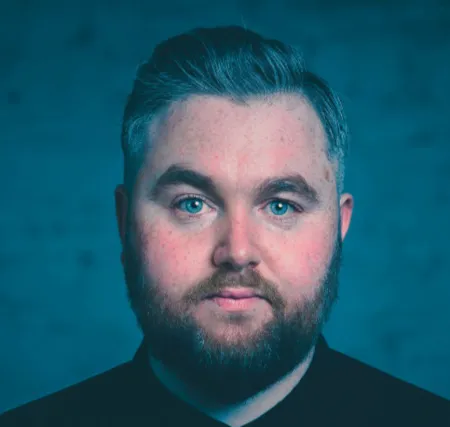
Niall Byrne is the founder of the most-influential Irish music site Nialler9, where he has been writing about music since 2005. He is the co-host of the Nialler9 Podcast and has written for the Irish Times, Irish Independent, Sunday Times, Totally Dublin, Cara Magazine, Red Bull and more. Niall is a DJ, co-founder of Lumo Club, event curator, Indie Sleaze club promoter, and producer of gigs and monthly listening parties & events in Dublin.