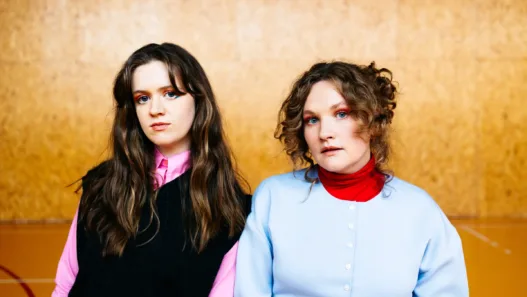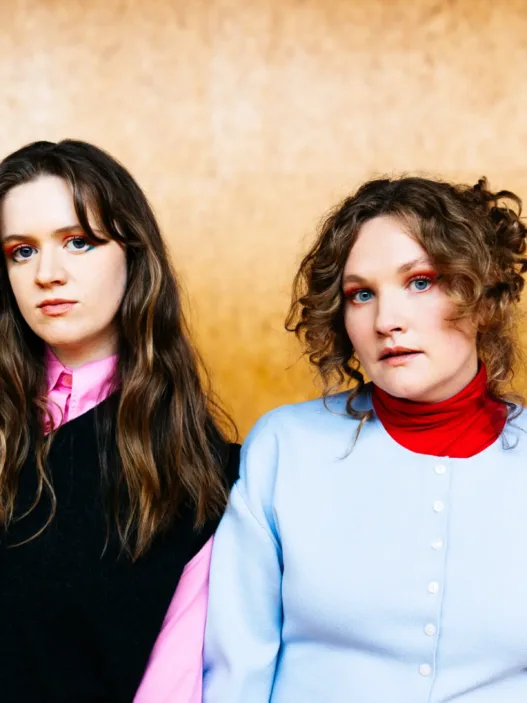





Denise Chaila has been working on her own artist development in recent years.
The Limerick artist has spent time away from the spotlight surfacing only to offer a glimpse of what’s preoccupying her eloquent mind.
A lot has happened in the five and half years (!) since Denise and I sat down with pals to have a chat for the Podcast. This time around, it’s just the two of us, with Denise sharing the journey that took her from Ed Sheeran remixes and support slots to an artistic and creative re-evaluation that prompted her to put the breaks on her career as it barrelled ever higher and forward.
In this episode, Denise tells us why she shunned the limelight, and the machinations of the music industry around her, and illuminates on recent times that have taken her to visit the childhood homes of J Dilla (Detroit) and Michael Jackson (Indiana), making a film with Limerick-born LA photographer and director Brian Cross aka B+ about the Supremes performing in Limerick, meeting Erykah Badu and her recent experiences exploring traditional Irish music and sessions.
On Friday, Denise Chaila performs a rare hometown show as part of All We Have Are Days, with the show at billed as an in conversation and performance, which as Denise told me will aim to tear down the barriers of performer and audience.
Listen to the podcast here:
Listen on Apple | Android | Patreon | Pocketcasts | CastBox | Stitcher | Spotify | RSS Feed | Pod.Link
Niall: So it’s been five and a half years since I actually sat down and had a chat with you, which is kind of crazy. I mean, a lot has been happening.
Denise: Yes, a lot has been happening.
Niall: So, I mean, I haven’t even, mean, I guess all of the stuff with the mixtape and all, don’t even know if I’ve talked to you properly since then. And I’ve only seen you kind of it here and there, like at the choice and stuff like that. And here and there, it looks like you’ve been busy doing some thinking and renewing and kind of what would you, what would you say you’ve been doing for the last while?
Denise: Growing up. Growing up. Yeah, it’s been, I guess we could call it artist development, but I kind of felt a real need at some point to just take a step back and reassess. Cause things were moving really fast for me at one point. They were. They really were. Yeah. It was like, I would wake up every so often and it was big decisions and answers that were needed in the next hour. And you know, we need a confirmation on that. this life-changing thing is on the table, are you going to say yes or no? And I got into, don’t know, I just got into a place with it where I was like, think I’m more focused on the professional aspect of all of this than the music. And I think I’m starting to care more about like schedules and structures and like, I have to do things more than I feel things and that’s unacceptable.
So I just kind of made everything stop and I was like, look, when the dust clears, whatever remains, that’s what’s real. And if I still love music by the end of this and I’ve won, but I’m definitely not the kind of person who can make a passion a definitive eternal career without sacrificing some joy is what I learned. Cause I don’t know, the industry part is something that I didn’t really understand.
Denise: I didn’t really want to understand if I’m being honest. So I sought to sow my wild oats in different directions and explore different ways that life could offer itself to me before I just really said, okay, this is really what I’m doing for the rest of my life, you know? So I’ve been doing that for five years.
Is there a case of that where, you know, you’ve been like, you, you got a lot of accolades and things, opportunities that were quite, you know, obviously supporting edge here and all that kind of stuff. It’s very big. It’s very big. So did you feel uncomfortable in that level? I mean, that’s a lot for somebody to go from, you know, okay, I’m making some rap songs. I’m doing some spoken word stuff to playing these big shows and supporting and people talking about you as well.
Denise: That was always very strange because like, I don’t think that I’m not socially awkward at the best of times, but then there are some situations where I was like, my God, I don’t know what anyone knows about me before I enter any room. so I was like, always a little bit uncertain about how to have conversations and like, what’s the new way to talk to people? Like, for example, people would be like, very kind and nervous about attempting to say my last name and still are because you know, people are sound and they would always come to me and it would be like a Denise. I do, but I never meant to like give people existential dread at the notion of like addressing. I think I maybe overextended myself in that capacity. But no, I have been enjoying just like.
Niall: You have a song about this.
Denise: Maybe the song underscores that. But, meeting people and getting an opportunity to be like, no, no, that song is an invitation. You can ask me and I’ll tell you, like, I will not get thick with you. It’s actually grand. but yeah, no, I think that like, things did get really quick, really fast. And I don’t, I don’t know if it’s necessarily the speed being honest, like if you’re not prepared, you’re not prepared. And as a person, like, you know, I was just coming out of COVID and I hadn’t really had an opportunity to assess where my head was at.
And a lot happened during COVID on a personal level, like nevermind the professional side of things. like, I keep on finding myself explaining with a little amusement to some friends that like throughout COVID while it was really incredible to finally be able to perform and do my music. A lot of what I did was empty room type stuff.
And that’s not how the world works when people are in the room. You know, so I think that I don’t know what that phobia is where you’re kind of afraid to be outside. Is that agoraphobia?
Niall: I think that’s in closed spaces, but I don’t know… [it is agoraphobia]
Denise: Not claustrophobia. Like I genuinely had the opposite for a minute where I had to sort of like teach myself like, and I don’t know if anyone really noticed, but I had to go through a lot of mental sort of like self-talk for a while and just be like, it’s okay to be outside. It’s okay that there are a lot of people here. It’s okay that there are a lot of people running you suddenly.
Niall: That’s COVID though. That’s what happened with all of that stuff. I mean, we were all deeply affected by it. Anxiety I didn’t have before is still around. Stuff like that. You’re like, where did that come from? mean, just a clean break in social norms just has a huge effect on people and it still is. It’s still happening for a lot of us.
Denise: It really is. I think that it’s going to continue to be like, it didn’t just happen in a pocket dimension and go away. Like it’s something that we all experienced rarely talk about and is going to affect us for the rest of our lives. Like, cause we all made choices about how we wanted to respond to it. whether whatever the choices we all made, we were sponges. Like we’re, really impressionable actually as people and we’re just recovering.
Niall: Some of those choices were not our own, you know, like I think about this a lot in terms of music and the music scene and there was a line broken, but how people move through the world in terms of art, music, spaces that we could gather, communities. And there is an element of all of that when you come back from it for the first year, it was all excitement. Things were happening again. And I was very grateful for that.
But the other part of that is, there’s a sort of grief in the background where you’re like, ‘this isn’t the same as what it was’. It’s like the broken line of things that happened that would not happen naturally was broken. And all of a sudden you’re faced with this new world. And then, you know, obviously things escalate in the last few years and there’s so many different things happening in terms that affect people making music now. Yeah. And I guess I wanted to ask you if the decision to take a step back, maybe it coincides with a change in what that world is at the moment in terms of like making music as a person who wants to maybe do it full time and wants to do it creatively, wants to do it commercially even. Like it has fundamentally changed. I think it’s got harder to live in that world. And in a way, the best thing you can do is just take a step back and go, what do I want? What do I want?
Denise: Exactly, because I kept on sort of in various ways hearing iterations of that’s just the way things are. know, something would come up where I’d hear something and maybe it would hit me a bit wrong, it would feel a bit off and I’d be like, hang on, but people don’t even talk like that to each other. That’s a bit funny to hear coming from someone who wants to work with you, you know? And so it would be like, that’s just the way things are, you know? You got to have a thicker skin to work in this industry. You got to do this and you got to do this.
And I never really could quite accept that because I’ve worked around a lot of various people in various different industries. And there’s always like, there’s always some funniness. Like there’s always like some basic level of like a discrimination, a discrepancy, something that needs to be addressed, something endemic to the system that you work in that you’re just like, I wish this would change.
But there’s at least an acknowledgement that everybody kind of feels the same way and if it could, it would. Whereas I started to feel like part of the norm of being in music spaces is that you had to accept a certain level of narcissism, a certain level of ego thrust at you, a certain level of unfairness over wages, a certain level of like, yeah, sometimes you’re gonna get fucked over and that’s okay, you just have to have a thick skin, we’ve all been through it. And it’s like, I don’t know. I don’t know about that actually perpetuating what is existing rather than changing it to a place that is more sustainable for you to live it.
And if I kind of swallow it and say, yes, okay, it’s fine to be spoken to by people who are twice my age in these really demeaning ways because they know that I want music so much, then like, I’m complicit in enabling them to do it to somebody else after me. In fact, I’m complicit in enabling them to continue to behave this way towards me because I haven’t actually understood what it is I’m actually trying to do.
And when I took a minute to reflect, was like, but ‘I don’t know what I want to do about it’. And I don’t know what kind of routes and like avenues are open to me to even begin to address this feeling of like, I understand that things have been this way for like, time immemorial, but I also don’t have to participate in that. If it makes me feel this stressed, you know.
And if it makes me feel like I’m compromising too much of my character to participate in it. So I was just like, as long as everything stops for a second, maybe I can think. Maybe I can like think and breathe and actually like rationalise on a character level what this might do to a person. cause I was really conscious also that the faster things move, the less you have time to think, the less you have time to think, the more stupid things you end up doing.
Whether it’s like just not taking care of yourself properly or not investing in your relationships properly or like letting really important things slide like, know, birthdays, weddings, like, you you just lose touch like, and I didn’t like waking up and like going to a show and I have the most incredible time of my life, but like, I’m looking at like a really sad message from a friend saying, “I was hoping that you could make it to my wedding and I’m sorry that you can’t, but congratulations on this thing”. And just kind of having that ache in my heart of like, “I don’t like this”.
And maybe that’s just a failure of scheduling, but like, I do think that there was a way to, and I do admire artists who have strong nose. I don’t know that I was ever
as into the catalogue of her music as some of my friends, but I remember learning that Adele didn’t like to perform at festivals. And that was one of her hard lines. Like, “I just won’t do that because it’s not me.” And it got me thinking, I was like, well, what are my hard lines? Like, what is it that, where is it that actually people will get the best of me? Where is it that I’ll get the best in myself? What is music even about?
So it took five years and probably will take five more if not the rest of my lifetime. But I do think it was the best thing for my mental health to slow down because I see what it does to… I’ve seen what moving too fast has done to my heroes. I have seen Lauryn Hill and I love Lauryn Hill and I think that things moved really quickly for her.
In a way where like, obviously she got to a skyrocketed level of fame that, you know, her sophomore album, which everyone’s anticipating somehow, was something that she had to talk about for almost a decade because she was like, I haven’t lived any life that makes it like interesting for me to write music about right now. The reason The Miseducation was so powerful is because I’d had 20 odd years to think and reflect and have experiences that I can then share.
Niall: We did a listening party for that album earlier last year and just, you’re right, like, I mean, there was so much going on in her life that was interesting, you know, comes from her heart, you know, experiences she was having that she was able to write about in such an eloquent way and like still such a beautiful album as well. think that’s the other part as well was like, you know, people are like, we want more, we want more. But I think that’s, yeah, that does feel like kind of an old time, in music to think about that, but it still happens. Like you always see, I mean, I don’t know if you’ve seen the Amy Winehouse film or any of those kind of every now and again, every year or two, there’s like a film where we’re like, or Britney, where you’re like, “oh, we didn’t treat Britney wel”l. And then it’s like, what? We have to learn this lesson. But the lesson doesn’t get learned.
Denise: No, I think that that’s, it’s Dolores O’Riordan. It’s Sinead O’Connor. It’s, it’s, it’s any number, it’s Amy Winehouse. It’s Tina Turner. It’s Whitney Houston. It’s Britney. It’s, it’s Lauren. It’s almost every woman who has like this incredible canon and legacy of like music has also sacrificed a lot of personal security and stability and emotional safety and groundedness in exchange for what people sort of romanticise as like the greatest offering of their lives. And I get that and I think that for a long time I’ve bought into this idea of leaving behind a legacy. And yet, now I just feel like what’s important to me now is that I get to live a life, you know? And I don’t wanna live it with my posthumous memory in mind. Like I want to be able to say that like I have actually begun to explore and experience and really, really feel like I’m here, you know? Like, and this is my one precious life. And I have all the options that I could possibly afford or ask for, look for at my feet and what am I gonna do with it? And I don’t think that music is a passing note, but I do think that I’m probably a lot more of a minstrel than a performer in the traditional sense of the word.
I want to lock in with communities. want to travel and sing. I want to sit down at a table afterwards, perhaps not in a fancy restaurant, but at somebody’s home and exchange stories and then move on to the next place and do the same thing all over again, you know.
Denise: And you did do some traveling in the last few years, right? I mean, Detroit was one place you went to.
Absolutely. Worked with Waajeed up there and I just, yeah, I’ve made a lot of music in the last five years. It’s been like…
Niall: Did you travel with making music in mind?
Denise: I mean, I was visiting friends who were musicians. And when I have friends who I connect with and they have creative work that I admire, of course the conversation comes up when we dream together, wouldn’t it be cool if we dot dot dot. But with Waajeed, was really, really incredible how quickly I started to bond and lean in to work with him. And we visited his house and within maybe two hours, I was downstairs in his basement confessing that I’m not really au fait with house or EDM or anything. And he was like, “girl, it’s such black music though. You’re in Detroit. No, like I’m going to show it to you.”
And he did. And I was just so incredibly just like mind blown because like sometimes I guess you just need someone to walk you into an experience, a genre.
Niall: Absolutely. Yeah. I mean, Detroit is that for a lot of people and obviously Dilla as well.
Denise: I visited his house.
Niall: Yeah, tell me. I mean, I got obsessed last year with Dilla Time, the book. It’s so good. It’s such an amazing read, It’s one of my favourite music books I’ve ever read because it’s not only is it the story of Dilla, but it’s the story of like musical sensibility and how rhythm works and how he changed, like how people thought about rhythm. And it was just so interesting and I was just so fascinated. already loved Dilla, but there’s something about that book that was just so, told a great story of Detroit, a great story of Dilla and everybody around him. And it was just so wonderful in terms of how it addressed the musicality of what he did as well.
Denise: To add swing into a machine is incredible. I went on a road trip with B +, and we went from the Midwest to Detroit and just took that drive with the intention of meeting Waajeed and filming the Supremes film. wWe stopped because I had a few pilgrimages to make. So I went to Michael Jackson’s home and, the name is escaping me right now, but we, we wandered around this, this estate and it was so bombed out houses burning roofs, missing everything in random and various states of like, looked like war had happened. Yes. Let me look that
Niall: Where was this? Was it like when he grew up kind of thing?
It was his childhood home, like when he was like a kid kid. Back when Joe Jackson was accused of abusing his children for their artistic greatness. And yeah, it was like this really, really burned out estate and then his home painted white. charms all over the fences and gates and really, really, really just like a shrine. looked like Saint Brigid’s Well or something in Knock that you might find people coming to. Yeah, it was, was, it was crazy.
It was in Gary Indiana.
It was really interesting. then I think I might be misremembering this, but somebody came up to the car while I was still there. Cause like I went out and I saw the house and it was one of those moments when you realize that you’ve come all this way and it wasn’t what you thought it would be. And it just didn’t do anything for me, you know?
Niall :That’s like the Giant’s causeway for me. Ah no. It’s okay, it’s okay. It’s alright.
Denise: I go off on an adventure and I’ll have like a destination in mind and then every time I get to the end point, I’m like, it was about the journey. you know, cause like it’s really like when you get there, it is a house, you know, like there is nobody living in it. That is a home that held people. That is their personal home and their personal life. And I have very little honestly interest or attachment to that. It was other things. was like, I was looking for a feeling of growing up in Africa, listening to Michael Jackson’s music and thinking to myself, I wonder if seeing where this person was raised would make me feel anything like that again. And of course it didn’t, but like, know, then going and sitting on the stool, like on Dilla’s doorstep was like incredible.
And that was just like me looking like a sign on the corner of the street and like sitting down and like on this like wooden porch and just like feeling like, my God, like you came to and from school here. You sat in that room and made your music. And maybe it’s just because I knew that like he was doing it from a position of self-determination and like autonomy. Like maybe it’s just that I could relate to this thing of coming back and like choosing making his own decisions, drop out of school and all that kind of stuff. Music instead, those kind of ideas, you know.
Niall: Absolutely.
Denise: It’s so punk rock. Like it’s actually incredible. Like, and the more I sat there, the more I was just like, I don’t really, I don’t think I’d be the kind of person to visit graves of people who I haven’t had a personal connection with. But like I did sort of have this frustration where I was like, should I hav brought something with me to just say like, you know, I’m glad that you were here, you know, and I was here too, because I was looking for you. Like, yeah, I ended up getting permission from Mochila B plus and Eric Koleman to remix ‘Untitled Fantastic off of, I think it was Suite For Ma Dukes. Yeah, and it was the most stressful ask I’ve ever received. Because what do you mean? You know, this is a J Dilla beat from J Dilla’s friends asking me to rework some music that they had orchestrally transposed as a gift to his family, his mother and his fans.
And I was like, “ha ha, great. I would love to”. So I said yes, not knowing what the heck I was gonna do. And then I think I sat on it for several months, not knowing how to approach it and just feeling like there was this like incredible sacred, holy space in the middle of my computer’s hard drive where I was just like, “I can’t open that file without washing my hands”.
I don’t know what’s about to happen next. And when I eventually did do it, I worked with these guys from Brazil called Deekaps and they reworked the song slightly. And then when they sent it back to me, I just, I was like, I can touch this now because someone else has broken the seal. Do or die now or never.
Niall: Yeah, tell me about obviously B+ for people who don’t know is a Limerick born photographer and a man who was around a lot of the LA artists and Stones Throw and Dilla and stuff like that – he did the Endtroducing DJ Shadow cover, all that kind of stuff. He was instrumental in that. He took that photo. Obviously he’s from Limerick. So when did you meet him though?
Denise: I’m actually looking at my journal yesterday because I met an artist called Aidan Kelly, photographer DJ extraordinaire. And he described B+ as an Irish parish priest crossed with Rick Rubin. Shout out to Aidan for that. I had to write that down in my book. was just like, no, that’s staying with me. And it was clearly for this moment. Thank you book.
I think I first met B when he was doing an exhibition at the Sugar Club. Erykah Badu was playing that night as well. And he had this incredible exhibit just up the road. And I wandered around looking at these images of like, my God, I actually, was the Fugees, it was Erykah Badu, it was Jay Electronica, it was Mos Def. And I was almost lost in the middle of this moment, because I was like, these are a lot of black artists who do a lot of hip hop and R&B and soul in ways that so much of their catalogue won’t be played on the radio here. And so much of their catalogue is something that I’ve gone and found privately and have had this personal relationship with that is not public, or can’t be experienced or enjoyed publicly a lot of the time. And suddenly here’s this person who lives just up the road from me, who has had a lifetime of collaborating with and like really workshopping the dreams and the goals of these artists with them. And he is exhibiting that work here in a way that is so normal and is so reachable and touchable. I just, and you follow his career and his trajectory and it’s just the most incredible journey of just watching someone say, “no, I care enough to do this and I care enough to do that. And I care enough to do all of it very well”. So I was very familiar with his work.
And then I think that that was when Ghost Notes was just out or been out. Yeah, it was the Ghost Notes kind of show that exhibit. And Erykah Badu was playing afterwards and I remember he was very kind and he took me around some of the art because I definitely looked a bit lost and he took pity on me. And afterwards when we went to the show, he, I think also saw me looking at Erykah with like stars in my eyes and was just like, “would you like, would you like to meet her?” You know, and just found a way to get me.
So he brought me around a curtain and I had the sense that I was frustrating a lot of people and skipping a queue. And I walked in and I was in a room of people who were trying their best not to look like they were freaking out over her. know, people very deliberately, do you know? Yeah. Like we’re sitting on tables and your back is turned and you’re having quote another conversation, but everyone is hyper aware of exactly where she is in the room, you know? And I went and I sat next to her and I remember thinking,
She wears Ruby Woo lipstick and it’s red and it’s perfect on her and she smells nice and her fingers are dipped in henna. “What am I doing here?”
It was so surreal. I was like, “am I on anything? What’s happening right now?” I’m confused and sad because I don’t know what to do. She was very also kind because I probably looked very dear in headlights and she sat down and was, I think I had only just made ‘Duel Citizenship’ or was about to release it, I can’t remember. But she asked me what I do and I said, “hopefully music”. And she said, “well, if that’s what you do, then that’s what you do”.
And because the spirit of, I don’t know, some kind of boldness possesses me sometime. I was like, “next time you’re in Ireland, hopefully I can invite you to one of my shows”. And she looked at me…
…kindly and was like, “of course”. And then she was like, “do you want to take a picture together?” And I was like, “yeah, I really do”. And I have that picture kind of like in prize place, like framed on my phone still. But I don’t know if I showed it to many people since it’s happened, because it was like, again, one of these capsules of moments where you just like encounter a save point in your life. And forever after I’m like, “I told Erykah Badu that I’m a musician””. So now I have to be a musician. Yeah, thanks B plus, geez. I was very happy dragging my feet for another couple of years and now suddenly I’ve committed myself to something, no. Yeah, so I think that meeting B at that point really made it clear to me that if this was real, there are people who are doing it in ways that are so, so divorced from a commercial drive, like you will make money from it, but the goal is not to make money, it’s to make sense of things. And I think I’ve always been far more interested in people who want to make sense of things than the alternative, because it’s like what lasts after it all fades away, you know, what remains really.
“How much can I make this matter to me while I’m doing it?” Because money comes and goes. It’s feast or famine in this career. One day you’re on top of the world, the next day you’re picking pennies out of your pocket. And it just is what it is. you kind of also don’t lose when you decide that the thing that you’re doing, it means enough, to to keep doggedly just going for it, regardless of what’s going on around you. And for me personally, I don’t know if just performing to perform would ever be enough for me.
Niall: So you met B+ and others, then this Supremes film came up. Because when I saw that I was like, what’s happening? Because I guess you were quiet and then it was I saw something that this was happening.
Denise: Yeah, the thing about movies and films, guess, is that it just takes longer than music even takes, which is a long time to me. The rollout for any singular song is just frustratingly long. Months in advance, you have to plan the thing. But I guess what happened is that two nerds met. Sorry, babe, but we are nerds. And we had all these conversations about Irishness, black music, and history and where we’re going and where we’ve been and how things have been changing. And it was like the most incredibly like enlightening conversation because I got to see from the perspective of somebody who had been there in the 80s and 90s around the people who I was looking back on with admiration. And I’m like..
“What was it like meeting De La Soul? was it like talking to Mos Def? What was it like? Being around Biggie. What was it like when the stuff with Pac popped off? What was it like to think about the East / West Coast conflict over there? Like, what was it like, you know?”
And the more he started explaining, the more I was like, this is just human stuff. You know, like I could see this popping off anywhere in the world. I could really relate to a lot of this. And for the first time, I think I stopped seeing musicians as sort of legendary fingers and started seeing them as like young people trying their best to do the thing that they want to do the best, you know, and that’s someone’s friend, you know, and to me, that’s like Biggie, that’s Tupac. And to people like Donnalisa Fisher or Dream Hampton or B +, these are our friends. These are people that we have worked with. These are our colleagues. This was our community. And they’re gone and they’re deified by people who are kind of, yes, it’s justified in that. They did incredible things, but then there’s a strange objectification that’s left behind, I think, in the people who knew you. Where they’re like, I understand that their work means a lot, but that’s not actually exactly who they were. Or the person who they were is being rewritten posthumously all the time, you know, because you can do what you want with a memory.
And so as we started talking about this, I studied a lot. I did a lot of reading. I did a lot of reading. I did a lot of reading about Ireland and about Limerick and about the West of Ireland and about how blackness and Irishness has always entangled itself. In fact, just how Irish people have gone across the world and everywhere that they’ve gone have received a lot of…I don’t know if I want to call it kinship or friendship or whatever the case may be. It’s just like, it’s very rare to go anywhere where people don’t have strong feelings about the soundness of Irish people, you know? And then he told me a story about how the Supremes came on a tour to Ireland and it was a very, very poorly plotted tour to the naked eye.
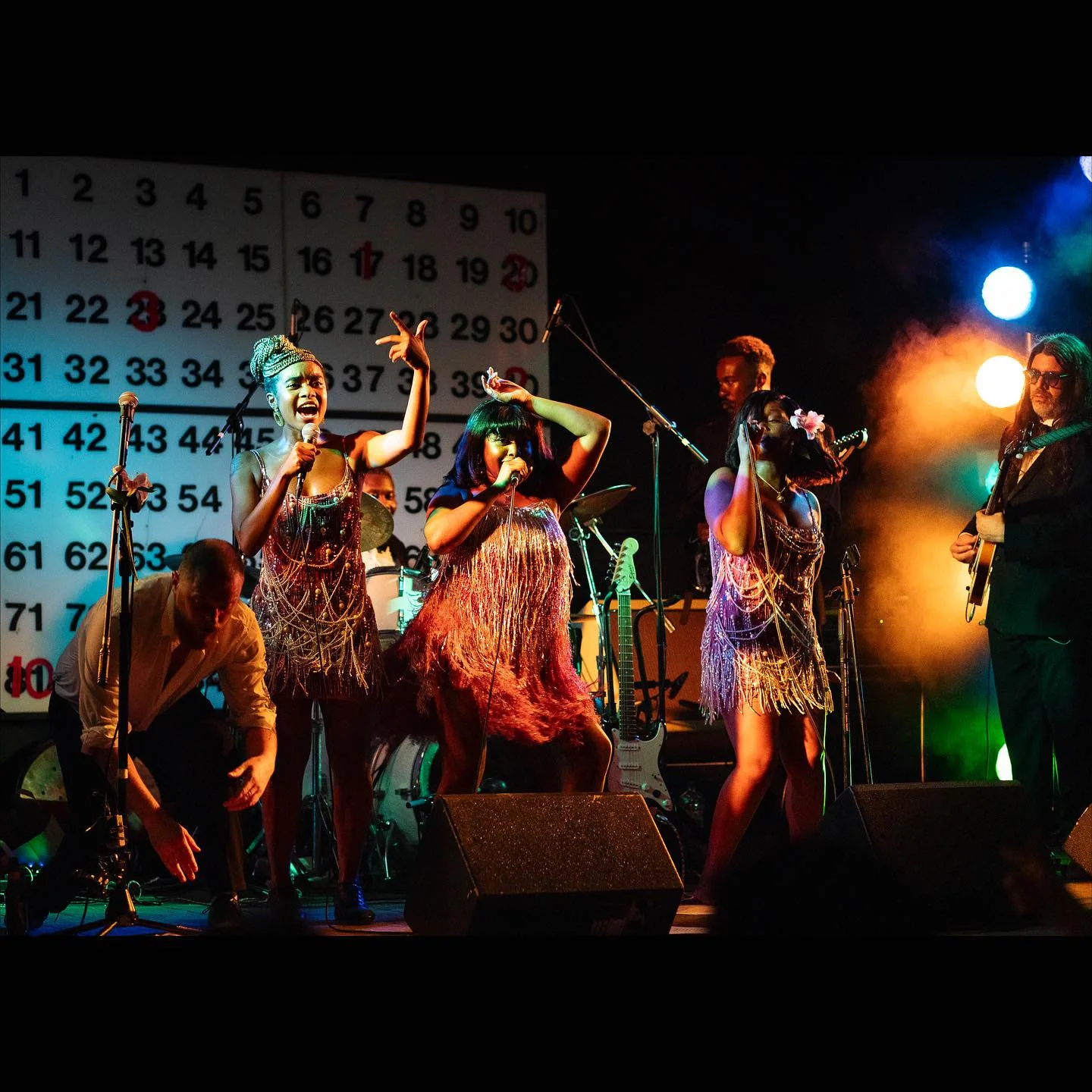
It’s kind of a mad psychedelic story that results in them doing a show at the Savoy in Limerick and getting robbed as they leave the city.
Niall: Okay, yeah. What year was this?
Denise: Yes. More coffee needed. Let’s return to that. And honestly, I’m also being kind of vague because I’m not entirely sure just how much I want to give away about the whole thing. But it has become a poetic love letter, a eulogy to Ireland.
You know, the Supremes came and they performed in Lahinch and they performed in random places, like random little pubs and like their dressing room stinks of beer and they’re like getting changed in the tour bus and like trying really hard to make this work.
Yeah, I’m not gonna spoil too much. Either way, it was just this weird story that didn’t quite make sense. And the more we dug, the more things came up. And this is the year that Bobby Sands had died. And so I ended up going past Long Kesh one day with B +, like thinking to ourselves, “are we going to go and really sit down with this”?
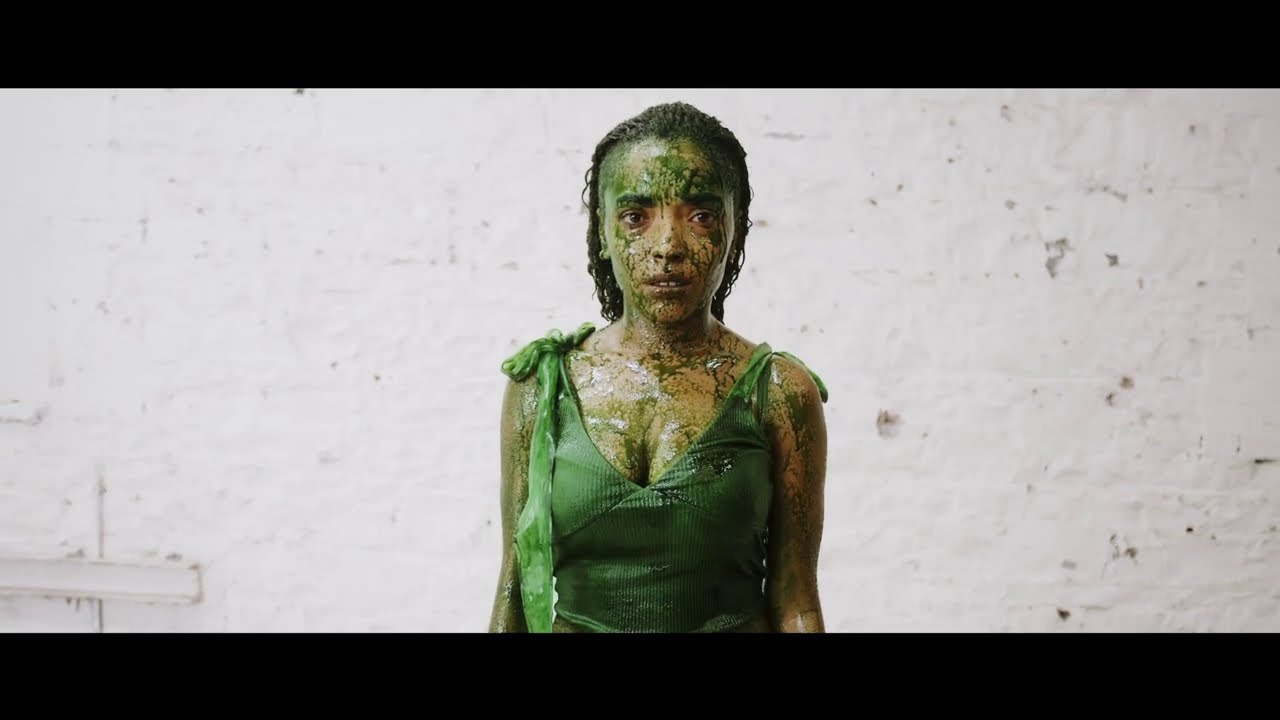
But it is a beautiful story. We… brought a few of our friends, Quantic, SlyFifthAve, Negro Impacto, Kait Rock, Jackie Whitnill Jr, , who was playing the drums for us. It was an incredible, incredible thing to not only, again, retrace footsteps. It’s all roots, it’s all journeys, and it’s all finding yourself by walking down the same path and going, okay, if we were to recreate the show in the St. John’s Pavilion, how’d that go? You know, right back to the start. We are, we’re here, know, Frederick Douglass was in Ireland. Of course. of that, you know, it was, yeah. So we made a film and it’s about to be completed. Okay.
Niall: And I mean, you were acting in this? You are one of the main cast?
Denise: Yeah. Yeah. That’s good thing to do. It’s something I’m really, I reflect on it with a lot of joy. There’s a lot of trust that people put in you when you’re like, not just involved in front of the camera, but you’ve been involved off camera too. And like the developmental conception space. In fact, when we were in Detroit, I also went to, we were filming in and through the streets where the Supremes were born, where they went to school, like, here’s me in a red dress, jumping fences in front of their old school with a tattered American flag, singing, singing and like doing as much as I can to just sort of like connect dots, you know? I think the police actually came that time. It was really interesting.
I was just jumping fences. I don’t know how much of this I should be admitting, like, was jumping fences. Punk rock. Hey, I’ve still got to have a streak of something in me. So I mean, it’s not the only thing I’ve been working on. Like I worked on a film with David Curley recently as well.
Probably about a year and a half ago that we filmed everything, that we wrapped filming. But just the editing process does take a minute. And if music videos take a little bit of time, like a feature film. David is a good friend of mine. He’s having an incredible February actually. Oh yeah, it’s not even February yet. Shout out to you, Dave. But yeah, no, it’s been like I’ve been experimenting with different mediums of art. Like I’ve been really interested in textiles. I’ve been really interested in film. I have been writing prose and poetry again, which I’m very relieved for because I think understanding myself as an artist who was interested in radio play, think naturally I lent away from spoken word, but it was kind of my lifeblood. know, it was the thing that made my like my fingers prickle and my eyes kind of glint and everything perked up. was like, this is actually the form that I see the best of me. And I really, really enjoy everything surrounding it, but it feels like that’s my heart.
So I have been writing a lot more spoken word and just sort of allowing myself to revisit old stories with more mature eyes, hopefully, and start to rewrite, yeah, things I’ve been telling myself for years and like how ‘Duel Citizenship ‘sound in 2026?
Niall: Well, I mean, you are performing next week. So is that something that you will be doing? Is that kind of figuring that out? So last time I saw you play was at Body and Soul, I think maybe. I don’t know what year that was. 23 was it? Maybe. Yeah. It was a stormy, thunderous weekend.
Denise: I remember it. I was wearing white and I had the butterfly wings. No, feel like, oh, at the risk of sounding too vulnerable, I do feel like there was a point where I was doing shows very mechanically and hoping somebody would point it out to me so I could justify taking a break and re-calibrating my entire self. And I think that I am grateful that I was the person who had to step in and tell myself to chill and that it’s okay to take your time. Because now, like next week, so it turns out I’m kicking off the whole festival and ha ha, I’m gonna be headlining, woo. But that’s gonna be like. In my head, the working title of the show is called ROUTES, R-O-U-T-E-S. And I’m going to be experimenting with traditional forms. for the last two years, have been, yeah, a lot more, a lot more enmeshed in the trad scene. Because I find that like, you have music in the music industry, but there’s this sort of other world, a whole different ecology that trad circulates around. And it’s almost, I find it really hard to sort of understand how and where to go and what to do and who to speak to. But thankfully I have like good friends who want to walk me into spaces. And so it’s been, it’s been great. I’ve been meeting Seanchaís. I’ve been meeting sean nós singers and dancers and people who are willing to sit me down and like teach me a verse of ‘Spancil Hill’ that I’ve never heard before. And, you know, there’s just, there’s a lot going on in, in Clare and in Limerick and in the surrounding sort of like parishes that makes me go, you could really just like travel from village to village and get lost very easily for a while. And I did. And then I was like, okay, but I’m still a rapper. So how do the worlds collide, you know?
Niall: But that’s interesting, isn’t it? You’re like, well, OK, now I’ve done this and I’m learning about this and then how do I incorporate that or explore that more?
Denise: Turns out they’re not such different art forms.
Niall: It doesn’t surprise me. And other people are discovering that at the moment. it’s like trad is something we are all embracing and connecting with in a way that feels new and fresh. And like, think this does happen regularly. And I subscribe to the idea that, you know, things are cyclical and they come back around and there’s a real interest in traditional songs. And maybe that’s partly as a reaction to all the other things that are happening in culture. It’s like, well, But this is also an identity thing as well. It’s like something that we can all relate to because it is part of us. And when I was younger, I, you know, there wasn’t much of that around for me personally. Yeah. But I’m learning about it now more as time goes on in the last, probably the last 10 years, really, but especially the last few years where there’s such an interest and visibility. Yeah. It’s just really fascinating to me and an embrace of our Irish culture by Irish people who were like would normally be like, I think where people were previously, you know, starting a rock band and they’re starting a trad band. And that is just really interesting.
Denise: It’s so cool. And it makes me focus a lot more on the idea of language. It’s like, indigenously back home, we have 72 different dialects in Zambia. And here, I find myself playing hopscotch with Irish. And I have had this commitment in my head for a very long time, like, at some point you will be a Gaelgeoir, you will. Because the folklore, Aguson Kupflafokkul, gets you a long, long way, especially when you’re out West, you know, like there’s something really special about being in Galway, Connemara, the farther you get, the more rural you get with people, the more you realise the connection really means going and finding them and sitting down and learning things and being like, yeah, okay. Like it’s going to require effort, but like, it’s really nice to put the effort in. even for like minimal effort, I just saw people kind of go, she’s trying, and start to really warm and welcome me into the places and tell me things, you know, like that I don’t think I would have had the privilege of hearing if I didn’t try to take myself out of the flow of my life a little bit and like be curious, you know? So routes is really that, it’s like getting back to roots, you know, getting back to the sort of like, there are places in the Burren and in Clare that they’re just barren as the name suggests.
And it’s really, really incredible to go there and find what is growing. And what’s growing is usually art and communities and people and magic. And someone will always tell you about it if you ask. the show is now, yeah, it’s kind of like a rework of a session. We’re deconstructing the stage. I very, very much do not want to be on any kinds of pedestals. And I have invited some friends who I’ve never played with before to play with me for this show in the interest of also just taking a few risks for myself. But the people who are coming to the show who are musicians, I’m encouraging to bring your instrument because there’ll definitely be a song or two that you know. And if you’re comfortable just raising your voice, chipping in or strumming quietly, like whatever it is, just come.
You know, cause I think when we gather, music is supposed to be a little bit more, the only word I can think of is congregational, but like, I don’t know how to separate that so much from its religious connotations. It’s just, I think when people get together and they have the opportunity to make some noise together harmonically, we should. And that’s what I always loved about a trad session is like you’re deep in your pints, but like you’re having an incredible time. And if someone plays your song, you’re gonna sing like.
Niall: And isn’t it interesting that everything you talked about at the start in terms of, you know, kind of these levels and gatekeeping almost is like this complete opposite. Yeah. This open sharing community thing is, know, that’s what’s important actually. Seeing that there with Trad, you’re feeling it.
Denise: I am. It’s not like I think I’m going to become a trad musician. I think I’m still in the process of reinvention in a way that like, I’m still mashing things up together and pulling out interesting bits every so often and being like, that feels natural and this feels natural. But I also think that this suits me so much more than most things I’ve found because there’s a sort of everydayness to it.
I can really appreciate where music becomes a part of like the rhythm of life. You know, like you’re going to visit your friend and you bring your guitar with you and you’re sitting maybe in Mount Shannon on Willie’s boat and you’ve got a guitar and you’re just playing tunes. And then you stop and you have a chat and you know, what’s going on in your life and what’s interesting and like what’s happening around the local pub. “What was last night like? And then how would you give us another tune? Yeah.”
And I think I really like that as a way of life. And I think I’m really privileged to have the opportunity still on a platform where I can start to share some of these ideas and experiment with like, I’m used to the structure of a stage. I’m used to like the bookmarks of the show starts here, the show ends here. This is the stage, this is the barricade, this is the audience. You kind of are kept separate and this is how it should go. And I’m like, okay but what if we tried something else? So that’s where I’m at with all of it. It’s taken years.
Niall: It probably feels like there’s room there for trying something different every night or if you were doing it different nights, as in not mechanical. And then you can draw the room as the room and whoever’s in it can contribute as well. And that makes each individual experience for you unique, but also everyone else is there.
Denise: I don’t think we should sing the same song. I don’t think you can sing a song the same twice anyway, you know? And I think that like getting to know different stories, like I have a friend called Sam who is a woodcarver and he does do shows every so often.
He told me the Táin in a way that I’ve never heard the Táin before. And he told me about the Fianna in a way that I’ve never heard about the Fianna before. It made me start thinking about Southern African warriors and Shaka Zulu and all sorts of things. And I sat there and I was like, you know, sometimes you just need to record the thing. You just need to say it out loud and be like, yeah, there was a West African sailor who came to Limerick and flew the Irish flag and was imprisoned by the Black and Tans, because he was on Ireland side in the war of independence. And he stayed and lived most of his life in the 1800s and shared so much of his life. Actually, he changed his name to Sean by the time he died, you know? And there’s a cafe called Jack Monday that just closed down that was named after him. Yeah, people call him Jack Monday. But it’s also really interesting because then I’m thinking about like, you know,
Niall: That’s what his name was.
Denise: But then I’m also thinking about Goldsmithing and Richard Joyce who made the Claddagh ring who was an indentured slave in like North Africa. And then I’m thinking about like how Ireland has a naval history and like Fado music in Portugal sounds a lot like Keening and Irish morning musical traditions. And then I’m thinking about like what it means like we’re actually also really intrinsically connected that like we have more options open to us than we think we do.
And I’ve, yeah, been to Jamaica in these five years and Detroit, and I’ve been to Barcelona and random places around Europe. And just like, I feel like I’ve been looking for something. You know, I feel like I was really just like, I sat myself down and I was like, just, just look for it. If you’re going to look for it, go and ask people the questions and stop pretending that you will. Cause if you don’t make it happen, it won’t happen.
And when I did, was just like, everywhere I go, I meet indigenous people holding onto their cultures, but who are really open sharing things. And I think it was like around the time that the riots were happening in Dublin, I ended up writing so much because my experience of the world was so wildly different at that point. I had almost forgotten what it was like to be making music prolifically and the feeling of like logging in somewhere and like the majority of what I’m seeing is like just racial slurs, you know, and nothing about the music itself, just like drowning in this sort of like external identification. And then when I did start writing, I was like, you know, but I’ve just been talking to this one woman about Basque country and about like I’ve been talking to this other woman about like what it means to be Catalan and not Barcelona.
And I’m talking to this other person about like what it means to be Mexican. And I’m talking to this other person about like Brazil and about the indigenous of like West Africans in Bahia. Like, and I’m sitting down and I’m just like, okay, our music all sounds the same. You guys, like not really, but like there’s something there. Do you know what I mean? Yeah. So Routes is going to be an attempt, I think, to like get out of my brain.
A lot of what’s been inside of it and a lot of the music that I made when I was just like, okay, what happens if I wasn’t afraid of mixing at all and I could just do a show the way I wanted to? And Dave O’ Donovan and his team have been incredible about allowing me permission to just do something vulnerable and new and experimental. Question mark.
Niall: Well, I mean, that’s the best way to finish it, right? There’s loads to talk about, we will draw the question mark there. I think you seem like you’re at the start of something else, but also in between, in the middle of something as well, which is an interesting place to be.
Denise: there’s a lot of uncertainty here for sure. But I think that that’s honest. That’s the most honest thing I could say is that I’m heavily thinking and working something out. I’m not sure what it is just yet, but it’s coming much quicker than I thought it would be beginning of the top of this year. And I feel really ready to do something about it. And that’s…
So you’re going to start a Substack is what you’re saying. Yeah.
Denise: (laughs) And you know, maybe I should have started there like five years ago. But yeah, hi. Good to see you again Niall.
Niall Byrne is the founder of the most-influential Irish music site Nialler9, where he has been writing about music since 2005. He is the co-host of the Nialler9 Podcast and has written for the Irish Times, Irish Independent, Sunday Times, Totally Dublin, Cara Magazine, Red Bull and more. Niall is a DJ, co-founder of Lumo Club, event curator, Indie Sleaze club promoter, and producer of gigs and monthly listening parties & events in Dublin.