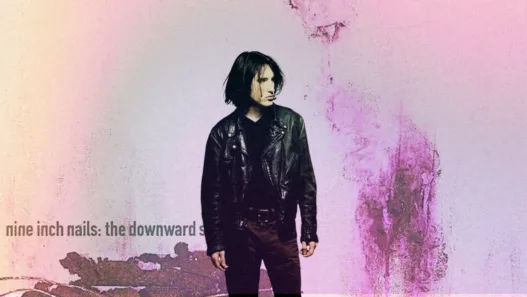




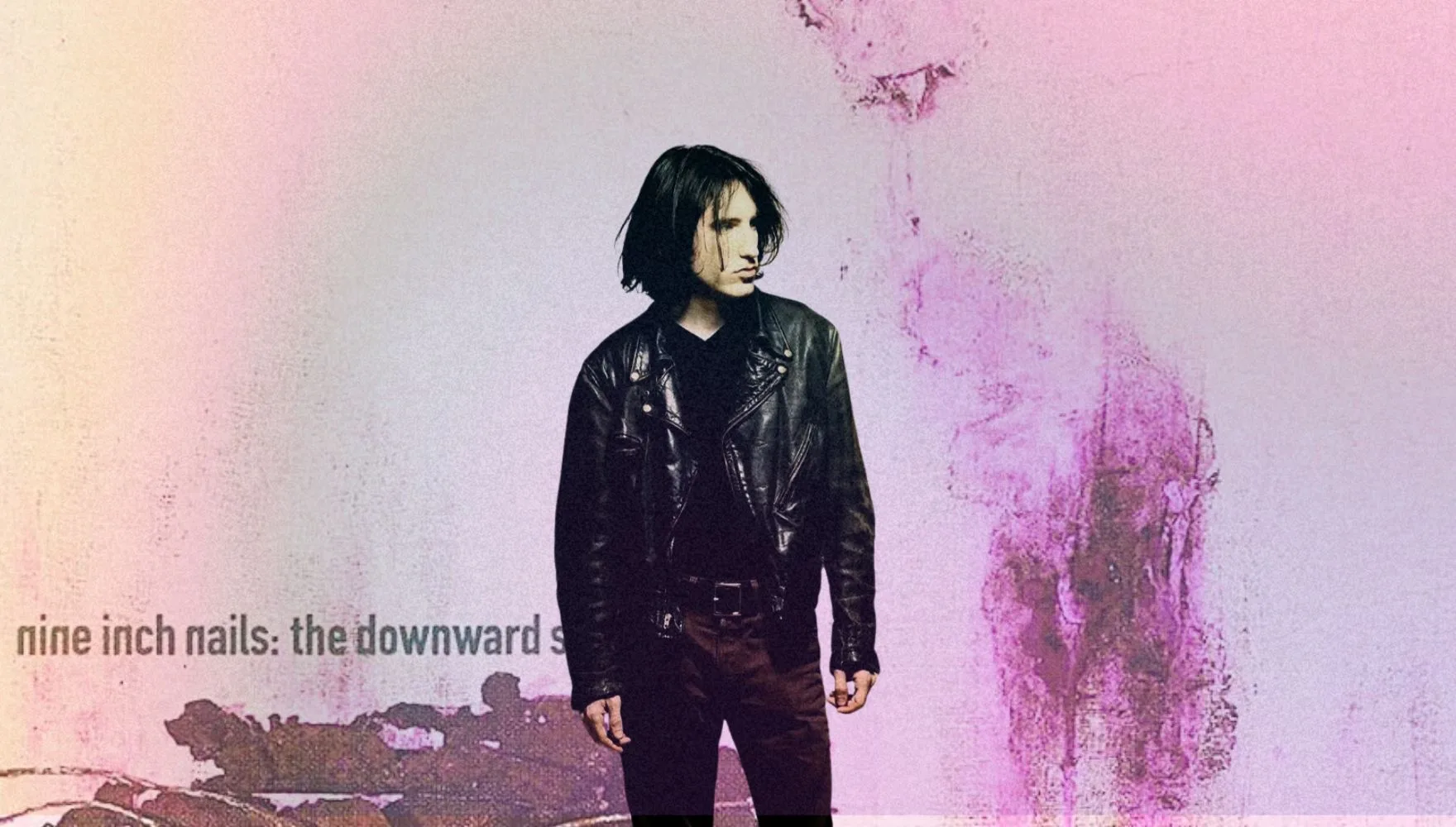
A live podcast recording from The Big Romance about Nine Inch Nails’ infamous second album from 1994, recorded in the house where the Manson Family killed Sharon Tate and more.
Nine Inch Nails’ 1994 second album is a nihilistic concept record about one man’s collapse: through addiction, violence, faith, suicide.
An industrial rock classic, a beautiful and brutal descent into self-loathing filtered through abrasive noise, EBM-inspired synth-punk and pop chaos, with Reznor as it’s chief destructive architect.
For this live album listening party event, Niall was joined by Dave Hanratty of No Encore Podcast who chose the record in the first place for two nights in the Big Romance.
What you will hear is a recording from night two.
♡ Nialler9 is independent and reader-supported. Support us on Patreon →
Transcript below.
We cover Trent Reznor’s route from small-town Pennsylvania piano prodigy to industrial star. There’s the fight with TVT Records, and the decision to record the album at 10050 Cielo Drive, the house where the Manson murders happened. We get into the samples taken from Aliens and THX 1138, the Bowie debt on “A Warm Place”, and the scathing review from Reznor’s hometown paper in Cleveland. Dave argues that Reznor is really a pop artist. The room votes on whether Johnny Cash’s “Hurt” beats the original.
Next up at Listen Closely: Frank Ocean’s Blonde on 15 and 16 December at The Big Romance, then Enya’s Watermark in January. Niall’s playlist of related tracks and influences is on the Nialler9 Patreon. Find Dave on the No Encore podcast.
Listen on Apple | Android | Patreon | Pocketcasts | CastBox | Stitcher | Spotify | RSS Feed | Podlink | Substack
* Support Nialler9 on Patreon, get event discounts, playlists, ad-free episodes and access our Discord community.
Guests
Episode transcript
Auto-generated, lightly editedIntro
Hello and welcome to the Nialler9 podcast, and to the latest edition of the Listen Closely series, a recording of the live album listening party discussions we have in The Big Romance every month. This one is an album we listened to at the end of September and start of October. We did two nights with Nine Inch Nails, The Downward Spiral.
It was the choice of my guest, Dave Hanratty of No Encore. I'm sure you know No Encore, a great music podcast, and it was a delight to have Dave down to talk about one of his favourite records. It's one of those albums that deserves to be heard on big speakers, and deserves the time and space to hear it in that context.
It's the 1994 second album, a concept record about one man's collapse through addiction, violence, faith and suicide. It was recorded in the Beverly Hills house where the Manson murders happened, and we'll get into all of that. It's an industrial rock classic, a beautiful and brutal descent into self-loathing filtered through abrasive noise, EBM-inspired synth-punk and pop chaos. It is a pop album. It also birthed the most famous cover of the 21st century, Johnny Cash's "Hurt". The original closes the album, which also features big songs like "Closer", "March of the Pigs" and "Heresy". A really, really great experience to do in a live setting.
Up next for the Nialler9 Listen Closely parties in The Big Romance is Frank Ocean's Blonde, on 15 and 16 December. That will be on sale the week of the 23rd, so next week if you're listening to this the day it comes out. I guess it's our Christmas edition, so that'll be really nice.
There's lots to look forward to in the new year. The only thing I've confirmed for sure is Enya's Watermark in January. I'd also like to do records next year from Rage Against the Machine, maybe D'Angelo, Jai Paul, Beck. We haven't done any Aphex Twin yet, and maybe some more MF DOOM and more Beastie Boys. I try not to be too rigid about these things. So let's shoot over to The Big Romance and listen to our chat about Nine Inch Nails, The Downward Spiral.
Before the listen
Welcome to Listen Closely. This is a monthly event where we pick an album, play it on these lovely Toby Hatchett speakers (made in West Cork), contextualise it, play it as loud as we can, and then talk a bit more about it. We did this last night, so this is night two. We all know it's a good record already, but it's particularly nice to hear it in a place like this, in a room full of people who want to hear it too. This is the 33rd edition of Listen Closely, and I'm joined again by Dave Hanratty. Or Grave Hanratty, as he's in his Halloween mode.
It's October. This is an album about one man's collapse, which is going to be me tonight, because I'm feeling quite fragile. I went to bed at half three in the morning. My hand is shaking, I'm a bit sweaty, and it's not just nerves. I made bad decisions last night. I should have just gone home. But it was a lot of fun.
My ears are just about coming back after hearing it on these speakers. It's going to be really loud, which is what we want. In about 25 minutes we'll listen to The Downward Spiral, the third release. It's a dark night of the soul: a man dismantling himself, trying to find meaning and discarding parts of himself in doing so. Where does he end up? We'll talk about that. But first, Dave, where did you first hear Nine Inch Nails?
I ignored them when I was younger, which was a very silly thing to do. My brother would have been playing them in his room and I was kind of afraid of what was emanating from in there. Too scary for me. I dismissed them for no real reason. I was big into nu metal. I still am. Any nu metal fans in the house? Don't be ashamed. It's not a phase, Mom.
I should have gravitated towards this, because the best thing about Nine Inch Nails for me is the mixture of aggression and pop sensibility. I was saying last night that I think Trent Reznor is a pop artist. Pop music rules when it's done well. I was in my mid-20s, watching TV one night, and the BBC was showing Reading Festival 2007. "Hurt" came on. It's extremely rare that televised music comes through the screen, grabs you and stops you in your tracks. You can get that live version on YouTube in glorious 360p, and I'd recommend it. I was frozen in time. I thought, why have I ignored this? What a fool.
From there I worked my way back through the catalogue. I said before tonight that this isn't my favourite Nine Inch Nails album. That would be With Teeth, but that's personal preference. After hearing this again last night, I'm retracting that statement, because it was a pulverisingly beautiful listen. I once said to somebody that Nine Inch Nails have no bad songs, which is a crazy thing to say, but I stand by it. A lot of their best songs are on this album, which is helpful for all of us here this evening. And I'm really glad people are wearing Nine Inch Nails shirts. It's a rare thing to see in the wild.
It's an abrasive industrial rock album, even though Trent Reznor didn't like that term. EBM-inspired, and there's some synth-pop in his past too, on the first album.
He had the A Flock of Seagulls haircut for a while before he went full goth.
My first encounter with Trent Reznor was the spinning bit in the "Closer" video, which MTV used in a package promoting itself. I hadn't heard the music, but I thought it was very cool. I was really into music videos at the time. I have a collection of music video auteur DVDs, and Mark Romanek has one with all those videos on it. The other one that spoke to me, probably the first Nine Inch Nails song I really enjoyed, is "The Perfect Drug", which was done for the David Lynch film Lost Highway. Romanek directed that video too, with Trent as a moustachioed, gothic, Edwardian aristocrat. It's so moody and dark, but there's a sprinkling of pop magic in these songs, and we hear it here. It can be a very dark and bleak album, but there are moments of light.
1994 and the road to the record
Context-wise, 1994 was the year of Parklife, Dummy, Ill Communication by the Beastie Boys, Dookie, Definitely Maybe and Nas's Illmatic. There was a lot of grunge around, and five weeks after this album came out, Kurt Cobain died. My sister had a ticket for the Nirvana gig in Dublin that year. It was the first time I understood that somebody's idol was gone.
Is that the first big news story you remember? Mine was OJ Simpson. I remember being ten, watching courtroom TV and thinking, is this life? Apparently it is.
We'll park OJ for a minute. So who is Trent Reznor? He wasn't a city punk or a guy from a big scene. He was from Mercer, Pennsylvania, a town of about 2,000 people. His parents separated when he was small and he was raised largely by his grandparents. He started classical piano at five and by all accounts was very good. He also played tenor sax and tuba, and did school band and jazz band. He was a music kid and a theatre kid. At college in Pennsylvania he studied computer engineering. That mix of a conservatory-style music background and computer engineering plays into this album, which uses analogue and digital together at a time when the two were converging for the first time.
In the mid-80s he moved to Cleveland, which had a small new-wave and synth scene. He was in bands called Option 30, The Innocent, Slam Bamboo and Exotic Birds. Exotic Birds appeared in the 1987 Paul Schrader film Light of Day, starring Michael J. Fox, which you can find on YouTube. He was also assistant engineer and general dogsbody at Right Track Studio in Cleveland. The owner, Bart Koster, let him use it, and that's where he demoed Pretty Hate Machine. Dave, how would you describe that album?
It's a lot more pop-focused. It doesn't have the level of oomph this one does. This one is a machine gun. But Pretty Hate Machine rules. It shows you the promise of everything to come, and it still has all-time anthems. People have compared "Head Like a Hole" to "Smells Like Teen Spirit" for what it gave disaffected youth at the time.
This album sold four million copies in America and over five million worldwide. Its themes are extreme self-loathing, suicide and colossal depression, along with the hope that you can overcome it. That isn't the stuff of commercial radio. But I guess it spoke to the time, and a lot of people were looking for something different and found it in Reznor. He's an unlikely superstar, but for a lot of people he's the standard-bearer of his genre and his time. The music videos had a lot to do with it too. You'd hear a video was banned and want it, and try to buy the record before your parents caught you and threw it in the bin. It's stood the test of time, and it's an incredible document, especially because he was in his twenties and mentally falling to pieces, and he captured that.
To release any music to the world you have to be a little bit brave, and at a certain point it's not yours anymore. This record means so much to so many people. Anyone who saw Nine Inch Nails on the recent trip to Dublin, which was absolutely wonderful, will know he doesn't reject it in any way. These songs are still part of the set and part of his DNA.
On Pretty Hate Machine, he was already very good at picking collaborators, which runs through his whole career. He brought in Adrian Sherwood and Keith LeBlanc, known for dub and electronic production. Flood, who had worked with Depeche Mode, Ministry, Nick Cave and Nitzer Ebb. And John Fryer, who had also produced Depeche Mode. They signed to TVT Records, a label best known at the time for compilations of TV theme songs. It quickly became fractious, because the label wanted more of the same. Trent is not a static kind of guy. He started making music without showing it to them, and that became Broken, an angrier, louder record and almost a bridge to The Downward Spiral. A lot of the ire was pointed at the label.
That was 1992. Then Jimmy Iovine from Interscope saw potential in Nine Inch Nails, and a deal was brokered to get him away from TVT. In the end TVT gets some royalties off this record, because of the original deal.
It's funny to think about promotional material for this album, because he deliberately said he wasn't making singles or radio-friendly songs, and wasn't trying to kowtow to anybody. I love him to pieces, but we're all walking contradictions. He says things like "'Closer' isn't a sex anthem". Sorry, it is. It's absolutely a lustful sex anthem.
We know who agrees with that. In 2007, AOL ranked "Closer" at number two in its 69 sexiest songs of all time. Who can guess number one? Marvin Gaye.
Recording at Cielo Drive
So we get to the recording of The Downward Spiral. He's aware of lore and myth, and he rents 10050 Cielo Drive in Beverly Hills, the house where in 1969 Sharon Tate, her unborn child and four others were murdered by the Manson family. He calls the studio Le Pig, because the word "pig" was daubed in blood on the door after the murders. He has said he didn't really realise what he was doing, or that it was that notorious.
Which is an absolute lie, let's be fair. It's crass, a bit juvenile, questionable. Years later Sharon Tate's sister confronted him about it, and he said he'd never considered that it could hurt somebody. He's probably being truthful there.
He was 26 or 27 when he was making this record.
And in a bad state of mind. On top of that, he's trying to be edgy and provocative, and lashing out at just about everything. He was once asked on a talk show what the biggest misconception about Nine Inch Nails was, and he said, "First of all, that we hate women, which we don't, and that we're industrial." All art is open to interpretation. I think he looks back on it with a bit of embarrassment, but it was a reckless-youth situation: let's go into this messed-up house and make a messed-up record. And that's what we got.
Talking to Kerrang! in 1994, he said that if there was any vibe in the house it was one of quiet, maybe sadness. He wouldn't leave for weeks, because the house was gated and on its own, and once he realised he hated LA there was never any reason to leave. He thought that might have added to the isolation and claustrophobia of the record. He told Guitar World the same year that he was more concerned with mood, texture, restraint and subtlety than with getting punched in the face 400 times.
Reznor plays nearly everything on this record. He brings in people like Chris Vrenna and Adrian Belew, who worked with King Crimson and had played with Bowie and Talking Heads. The live band is more of a separate entity. He's the driver. He had a mobile mixing console set up, synths, and early versions of Pro Tools, and he talks about sound design over songwriting. At these events we often find that the people who make these records decide to do it all themselves because they know what they want. James Murphy of LCD Soundsystem and Billy Corgan of Smashing Pumpkins are two, and Trent is another. He has said that every time he tries to branch out, he realises he should have just done it himself in the first place. So he does not play well with others. Bowie's Low, one of the Berlin trilogy made with Brian Eno, was a big influence. What did he say about that record?
Well, he stole one of the songs on this one. "A Warm Place", a gorgeous interlude towards the end and a necessary pause for breath, is essentially a direct lift of a Bowie track called "Crystal Japan". He said he didn't even realise he'd done it. Thankfully he and Bowie were mates, so Bowie was fine about it. Their relationship is a big part of this. He looked up to Bowie as a huge idol, and then suddenly he's touring with him. I can't get away from the fact that he's an accidental star. He's profound and thoughtful, in the lyrics and the interviews, but he's not comfortable in the spotlight. That extends to his collaborators. Richard Patrick was effectively told to keep walking because he wanted to do his own band, Filter, who are actually pretty decent. It's my band, my show, my way, and the results speak for themselves. Robin Finck has toured with him for years, and Ilan Rubin recently left to join Foo Fighters, which is such a downgrade for him, by the way. But they all know: you're the boss, these songs rule.
The live show at that point had a reputation for going so hard: cornstarch and mud all over themselves, breaking instruments. That was the brazenness of the time, when there was money in music. The band's reputation grew from Lollapalooza, and when this record came out there were television cameras everywhere and he realised it was a much bigger deal. The album really is a big deal, and a testament to him as a songwriter and producer. Flood was involved a little bit, and it was the last time they worked together.
Flood wasn't having a good time. There's a track that didn't make the album called "Just Do It", which was Reznor being extremely flippant about suicide. Flood said, you're not putting it on the album, it's not happening, and Reznor backed off. It's all the better for it. If you've seen the hilarious Thirty Seconds to Mars documentary, which I'd highly recommend because it's ridiculous, Flood's in it and he seems like a really chill English guy who wants to get on with his day. The idea of 1994 Trent Reznor kicking the door in on him is something.
Speaking of doors, when the album was finished Trent took the notorious door with him, and the house was demolished that year. So this was the last time it was used, maybe for the best, but we got this amazing record out of it.
The artwork is by Russell Mills, an English designer. He flew out for a day to meet Trent, and they talked about attrition and decay. There are a lot of references to that in how the music is digitally degraded, with samples.
there are a lot of movie samples, and I'll play a couple of key ones later. There's the repeated lyric "nothing can stop me now", almost a brazen "I am God, I know what's right" statement. He spends the entire album trying not to be brought down, but in a way he is. Track four, "March of the Pigs", clocks in at 269 BPM, so super fast. "Closer"'s drum track samples Iggy Pop's "Nightclubbing", and there's a Roxy Music sample in there too. The record kicks off with audio from a scene in George Lucas's 1971 film THX 1138, where a man gets beaten by a prison guard. Dave, anything else people should keep in mind before we hit play?
No, I want everyone to just enjoy the album. I find myself with the Herculean task of trying to add to this, and how could you? I've always thought it was absolutely brilliant, but hearing it last night in this setting gave me a genuinely deeper appreciation for it. I hope everybody has the same experience I did.
Right, let's play it. I'm going to turn the lights down a little bit, and let's enjoy this.
[The album plays in full]
After the listen
Dave, do you want to start us off?
Second night in a row where I'm thinking there's nothing any of us can say to compare to what we just heard. I keep coming back to five million copies sold, which is a wonderfully beautiful thing. And he was in his twenties. In my twenties I was barely getting through college and working bad jobs. I don't understand that level of artistic expression. Hearing it in this space, I keep getting wrong-footed. Opinions I've held about this record for years change.
I have a quote from him about "Ruiner", which is one of my favourite songs on the album. In 1994 he said he had such a bad vibe from that song, from it sucking in so many different ways, that he still didn't know if he'd got it right. Really? I've never heard anything like it. It's also the second night in a row where I thought someone was definitely going to come in and tell us to get out.
I've suffered from depression my entire life and I'm still very much struggling with it. I look at this record as an incredibly totemic work, a real document of someone else's life, and it is tough. But what I always come back to, especially with those themes, is that it's so honest. Too often when you try to bare your soul to somebody, even in a therapist's office, you end up qualifying it: don't be alarmed, this is just how I feel. With something like this, you feel like you're being listened back to, even though it was so clearly his own experience. He's this accidental avatar, an icon for an awful lot of people around the world.
It's been wonderful as a fan to see him mature and branch out, with the score work in recent years, and be incredible at everything he turns his hand to. He's in his sixties now, and I'm sure a lot of us in this room saw him at the 3Arena. I was saying last night: how does he look that good? The leanest man of all time. He's special, the album is special, and I hope everyone who heard it on those speakers felt that.
When you hear it in this context, the natural warmth of these speakers doesn't mask the bleakness, but it makes it feel more real, more foundational. It touches your core in a different way than headphones. It's body music as well. You really feel it when it comes out of the blocks with "Mr. Self Destruct". Then it goes deeper and darker. It's essentially an album where a man tries to strip away the parts of himself he doesn't want by doing things he shouldn't. There's braggadocio, attempts to beat the man, failing miserably, blaming others, blaming society, blaming everyone but himself, and in the end he doesn't know what he has left. There's a bleakness to that, but musically there are a lot of bright spots and pop sensibilities. Which track has the acoustic bit at the end? Is it "Eraser"? Either way, it's the kind of thing his peers at the time maybe wouldn't have done.
There are times when he's taking the piss, and it's still incredible. "Big Man with a Gun" is a track I've always struggled with a bit. He's described it as his critique of, in his words, misogynistic gangsta rap, and I've said that a white guy wading into that territory is really dangerous.
Also probably not the record to do it on, when you've got "Reptile" coming up towards the end. Probably not the time to be taking aim at others.
But hearing it again these last two nights, I have a new appreciation for it, because there are layers upon layers. There are tracks like "Piggy" that sound like a million steel drums and typewriters being torn apart by a thresher and thrown down a set of stairs. I don't understand how he did it, and that's fine. I don't need Trent Reznor to explain the record, because that would be really boring.
On that song in particular, he played the drums himself, badly, and left them in. That's part of the buzz and the discombobulation of it.
There are times I think the record is skipping, but no, that's just how it's supposed to be.
I'm pretty aware when the records skip, don't worry. "Piggy" is also supposedly about Richard Patrick, whom you mentioned earlier. Did you have a favourite moment tonight?
It's hard to get past when "Heresy" kicks off. You can't not move with it. "Closer" is incredible too. I think we have a clip of Trent talking about "Closer". It's funny, because he keeps rejecting the idea that he's a pop artist, and I think that song begs to differ.
Trent Reznor on "Closer"
[Clip of Trent Reznor, paraphrased] He says the record was uncompromising and one he needed to make, not a reaction to the label. When he handed it in, the label immediately picked "Closer" as the single. It started getting played censored, and suddenly there was a video to make for a song he'd agonised over. Mark Romanek's video, put together in a couple of weeks, turned out to be really good, and he had the rare experience of a video making the song better for him. He admits to frustration at the dumbed-down interpretation of what he was singing about. But he loves the idea of something subversive creeping its way into strip clubs around the world, and he's proud of it.
You can't control that, and that's a beautiful thing. I was looking at my notes and misread something about "Hurt" as being about "Closer": Sevendust and Leona Lewis are two of the artists who've covered it. Leona Lewis doing "Closer" would be unbelievable. Father John Misty did a cover of it live, which was really good. And there's an unofficial remix that mashes up a Tinashe track with "Closer". I'll send it to you so you can put it in the notes, and I'll post it on my Instagram (@hanrattydave). It's unbelievably good, over 30 years on.
[The remix plays]
It's incredible. I think he's just uncomfortable in some respects: he accidentally became important, and it's ruining his life a bit. I love watching interviews with him now versus then. He could be a bit of a dick in his twenties when he was making this, and that's fine. A rock star can be a rock star and a bit ridiculous, especially if you're making this album.
He has remained pretty unproblematic, as far as we know, when some of his peers have fallen. I'm thinking of people he worked with, like Marilyn Manson.
I desperately hope so. The Manson thing is interesting. I used to be a massive Marilyn Manson fan. I don't listen as much anymore, and that's not me being morally pure, it just doesn't feel the same. Even with the Slipknot gig that got announced, I really want to go, but the Manson thing, what are you doing, lads? Marilyn Manson made songs that truthfully helped me out of a really dark place when I was younger, and I don't think fans should ever be punished for that. I've got tattoos, some connected to music and some to books, and I'm always hoping: please don't turn out to be a horrible human being. Bowie, who is hero-worshipped on this album and by Trent Reznor, I'm sure some messed-up stuff went on in the seventies, but we love him because he's an alien who gave us music. And he predicted the internet, of course. I don't know. Never meet your heroes. If I met Trent Reznor I'd be too scared to say anything. What would you say? You changed my life?
What was the quote from the interview we mentioned yesterday, about who he becomes on stage?
This is from a nineties interview with Spin or one of those magazines. Remember magazines? He's asked who the creature is that he becomes on stage, and he says that's the version of him that's allowed to act out. Off stage he's always trying to be nice to everyone, because he knows what it's like to meet someone you respect and find out they're a dick, so he overcompensates. Then he says that after a show he doesn't care that you want to kill yourself, he doesn't want your poetry, and he doesn't want to go and do drugs. Come on, Trent! But again, he's younger, he's lashing out in an interview. That's fine.
He had to find his place in music, and he found it on his own terms after this. Things blew up when they played Lollapalooza, and there's a quote from him about how insane it became: TV cameras, the crowd far away, not feeling he could connect with them. He talks about feeling the loneliest he's ever felt on stage, singing those lines while people sing them back, giving everything and not getting much back. In a way he's found a place for himself that lets him sustain what he's still doing.
I think he's become a lot more comfortable, and that was on display recently. I've seen Nine Inch Nails three times: Belfast in 2013, Amsterdam in 2018, and the recent 3Arena show, the first night of that tour. That was special for so many reasons. I was standing around the B-stage, not knowing what it was, with my friend Norma, who only got into them recently, around the score work. I asked her what she wanted to hear, and she said "Closer", obviously, the sex anthem that isn't. She asked me, and I said I'd love to hear "Right Where It Belongs", my favourite Nine Inch Nails song, but they're never going to play it. Then he opened with it, the stripped-back piano version. The curtain goes up and there's Trent Reznor, close enough to touch. Not that I would. It was unreal. And then the Boys Noize section as well. I don't do drugs, but that was insane.
I really hope they tour that separately. And it's all reinvention: winning Oscars, Atticus Ross becoming a much bigger part of it and the only other official member of Nine Inch Nails. Trent's got five kids, and his wife, Mariqueen Maandig, from How to Destroy Angels, who appeared as part of the Boys Noize show too, is an incredible presence of her own. They turned up in Twin Peaks: The Return, in the best episode of that incredible work of art. He did an interview a while ago saying he's probably not going to tour for much longer, and fair enough, he's in his sixties and they're so busy. They're constantly working on scores, and some are better than others.
They did a new one, The Social Reckoning?
No, they use the motif in it. I can't wait to see The Social Reckoning, by the way. It's going to be terrible, and I'm really excited for how bad it's going to be. Did you see Aaron Sorkin at the premiere? He looks mahogany. But it was really satisfying seeing them win the Oscar for The Social Network score, especially because I assumed Hans Zimmer was going to win, him and his factory of unnamed interns. They've been embraced by the mainstream. That's not supposed to happen, but it's kind of beautiful.
The samples and the reviews
Speaking of films, there are a lot of film samples on this record, and I want to play two very briefly. Both are from the Alien films. This is the drum sound on "Reptile".
[Sample plays]
That's from the opening sequence of Aliens, the second film, where an airlock is burst open by Sigourney Weaver's character. That became the beat of the song. And on the very next track, the title track, the eerie atmosphere comes from the opening credits of Alien.
[Sample plays]
I like that bit of trivia. At the time, the album's reception was mostly positive but not all positive. The American reviews were very positive. Robert Hilburn in the Los Angeles Times gave it four out of four, calling Reznor rock's new prince of darkness and saying he delivers great things. He described it as going far beyond the anger and alienation of most contemporary rock, a major work likely to stand alongside Nevermind as one of the "twin towers" of nineties American rock. How was he to know? I don't think they use that term in a positive way anymore. Geoffrey Himes in the Washington Post was more ambivalent, but said there was an irrepressible pop sensibility underneath the angst-ridden lyrics, pounding synths and grating guitars.
Absolutely.
Lorraine Ali in the Los Angeles Times said Reznor took the bleakness of industrial music and elevated it to pop art, calling it a masterpiece of pain. The UK was less interested in industrial music.
It was Cool Britannia and Britpop. They weren't ready for it.
The NME review gave it four out of ten, and said Reznor still only has two speeds: menacing croon or demented howl.
They're not speeds, by the way. I've written some really bad reviews in my time, but that's poor.
The other people who really hated the album were the local press in Cleveland, which I think is really funny. The Plain Dealer said Reznor came across like a demented poster child for Psychotics Anonymous, and that the album relied on the same tired lyrical images and stereotypes Black Sabbath and Judas Priest had used in heavy metal for years.
That's the dream, though. You want your local paper to write a hit piece on you.
Trent did notice. In a Rolling Stone profile that year, he said the reviews were almost universally good, apart from the scathing ones in Cleveland. Bowie, on the other hand, said Reznor encouraged the computer to misconstrue input, and was very glowing about his work. They worked together a lot after that.
"Hurt" and Johnny Cash
I actually want to ask the room. Raise your hand if you think the Johnny Cash version is great. Now raise your hand if you think it's better. Two people. That's interesting. I went through a phase of being cool and saying it was better, and then I heard the live version and realised I was wrong. Reznor has been almost overly magnanimous about it, saying it's not his song anymore. He was asked if they could do it and said yes, he was flattered, but it sounded a bit gimmicky. Then he saw the music video and it all changed. He said that hearing that highly identifiable voice sing it, he wasn't cringing, it was good, but it felt like watching his girlfriend with somebody else. Come on, Trent, drop the edgy art for two seconds. And then he realised he'd lost his girlfriend, because it was so good.
At the time he was in a studio in New Orleans working on Zack de la Rocha's solo album, which has never been released. There are few things in this life that upset me more than the fact that there's a Trent Reznor-produced Zack de la Rocha album from the early 2000s that we're never going to hear. One track came out, "We Want It All", on the Fahrenheit 9/11 soundtrack, and it's amazing, of course. But Zack said it wasn't good enough. The weird thing is, Zack didn't want to sound like Rage Against the Machine, but also did want to sound like Rage Against the Machine, and Reznor was like, I'm out of here. But it's in a vault somewhere.
Reznor also said things felt even stranger when Johnny Cash passed away, and the song's purpose shifted again. He said it's incredibly flattering as a writer to have your song chosen by someone who is a great writer and a great artist. I think they coexist. You don't have to pick one or the other.
You'd be denying yourself the pleasure of two of the best songs of all time. But the original shouldn't be watered down. It's funny that people still think the Nine Inch Nails version is the cover.
It reminds me of a DJ I knew who was playing in The Workman's Club. They put on "All My Friends" by LCD Soundsystem and someone came up and asked, "Who's doing the Kodaline cover?" Kodaline are lovely, by the way. They're actually sound.
Further listening
Dave, what would you recommend for anyone looking for further listening? I've got a playlist of associated stuff and related influences that I'll share on the Patreon tomorrow.
I assume everyone here has heard every Nine Inch Nails album. Like I said, my favourite is With Teeth. It's a personal one, and I think it's flawless. But especially after these last two nights, there's no question this is the magnum opus. Not quite Nine Inch Nails, but my album of the year this year is by Loathe. If anyone here listens to Loathe, I can't get enough of it, and you can hear a bit of Reznor in there, a bit of the industrial, the word he doesn't like. There isn't a Nine Inch Nails album I don't like or would skip, and very few songs I'd skip. It's little things, like the end of "Hurt" there, when it crashes back in. I've always struggled with that, because I like the softer ending. But who am I, or anybody, to get in the way of what Reznor was putting down? This is, without question, a classic. I do hope in a year or so we can come back and do With Teeth. Or even the Boys Noize record. Can you imagine that on these speakers?
Last Friday, the Gilla Band album came out, probably their best so far. It's definitely one you could play after this and enjoy.
On that, it's funny, because you mentioned the artwork for this, and we're in the era of AI slop where no one seems to care anymore. But with the Gilla Band deluxe vinyl, there are all these paintings Dara did across the covers. There's always going to be a connection to this kind of music and a place for it. It's alternative, and that's fine. We're all the cool kids in this room, obviously. Gilla Band aren't directly comparable to Nine Inch Nails, but there are Gilla Band tracks that sound like they're literally attacking you.
Reznor's influence is far and wide, and it'll continue. He owes us nothing at this stage, but it's still great to get new music, new tours, new scores. He's been incredibly prolific and he is profound. He's not perfect, because none of us are, and this album might be the closest he'll ever come to perfection. I hope everyone enjoyed hearing it on these speakers, because it took the edge off my hangover. I feel better.
Sign-off
Thank you so much for being here, and Dave, thank you. I called you Grave Hanratty earlier because you've just put out a Patreon episode of No Encore.
Listen to the No Encore podcast. I swear it's good. New episode tomorrow, and I give out about people being too nice, so you'll enjoy that. If you're on Patreon, there's a two-hour episode of me recommending 31 horror films, because it's October. And lastly, I've been overworked lately and feeling like trash, and I thought, I can't do two nights of The Downward Spiral. But I actually feel really good. I don't know what that says about me. We're all a bunch of sick puppies.
Fair play to you for coming. Next we're doing Burial's Untrue on 28 October. It's actually sold out already. David Balfe of For Those I Love is going to join me for that. In November I'm doing Queens of the Stone Age's Songs for the Deaf, maybe two nights, because I feel that'll be popular. In December, Frank Ocean's Blonde, maybe two nights. And maybe in January, Enya. I keep putting it off. I bought the album years ago.
Scared to lose street cred?
No, I just chickened out a couple of times. Thank you for being here. There's only one way to finish this, and you know what it's going to be.
["Hurt" plays]
Niall Byrne is the founder of the most-influential Irish music site Nialler9, where he has been writing about music since 2005. Niall is the chost of the Nialler9 Podcast and has written for the Irish Times, Irish Independent, Sunday Times, Totally Dublin, Cara Magazine, Red Bull and more. Niall is a DJ, co-founder of Lumo Club, event curator, Indie Sleaze club promoter, and producer of gigs and host of monthly listening parties & events in Dublin.