



For anyone reading this site, there’s a decent chance you’ve thought at some point about whether there’s a more formal way to deepen what you already know about music, sound and culture.
MA in Music, Sound, Culture and Media
DCU’s MA in Music, Sound, Culture and Media is built for that knowledge gap – the first masters of its kind to introduce sound studies within an Irish and international context, and one of the more interesting interdisciplinary postgraduate options currently available in Ireland.
The course brings together expertise from DCU’s School of Communications and School of Theology, Philosophy and Music – two departments that don’t often share a classroom, but whose combined focus on music, media and sound studies gives the programme a distinctive shape.
Who is it for?
It’s designed for people already working or hoping to work across music production, sonic arts, audio-visual production, broadcasting and screen industries, as well as those in cultural policy, arts development, community work, cultural commentators, criticism and education.
If you’re a musician, a producer, a writer, a broadcaster, a curator, or someone working in the arts sector wanting to formalise and extend what you do, this programme is built with you in mind.
Programme overview
What makes it practical rather than purely theoretical is the structure. Modules cover Interdisciplinary Studies in Music, Sound, Culture and Media, The Global Music Industries, Music, Sound and Screen Media, Audio-Visual Media and Cultural Identities, Policies and Infrastructures for the Arts, and a Practicum module for those who want hands-on experience.
There’s also an Audio Production module and a Leadership in Music, Sound, Culture and Media module taught during a dedicated summer school. Students finish with either a dissertation or a practice-based portfolio with an extended essay – so if you’d rather make something than write 20,000 words about it, you can do that.
Requirements / Fees
Delivery is hybrid, so possible for those who are working full-time or based outside Dublin. The course runs primarily online with one in-person study day per semester and a mandatory summer school each May at DCU’s All Hallows campus. Full-time takes one year; part-time takes two, which makes it realistic for people balancing the course with existing jobs in the industry.
Entry requires a 2:2 honours degree or above, though DCU also gives weight to prior professional experience in music, sound, media or arts and culture – so if your CV is stronger than your transcript, that’s accounted for. Fees are €8,100 full-time or €4,500 part-time for EU applicants. Applications are open now on a rolling basis, closing July 31st for EU applicants, with the programme starting in September 2026.
More info
If you’ve ever wanted the time and structure to think properly about why music and sound work the way they do – and to come out the other side with something that credentials all the experience you already have – this is worth a look.
Full course details and how to apply at dcu.ie.
Closing date for non EU applicants is 1st July 2026.
Closing date for EU applicants is 31st July 2026.
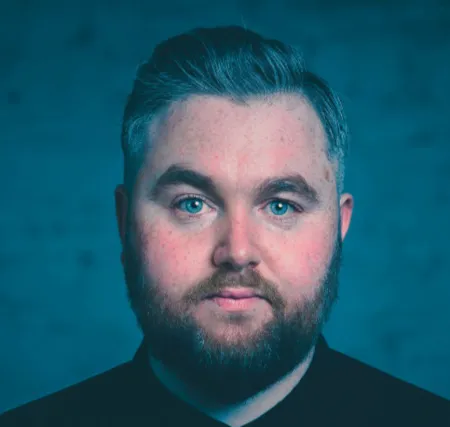
Niall Byrne is the founder of the most-influential Irish music site Nialler9, where he has been writing about music since 2005. He is the co-host of the Nialler9 Podcast and has written for the Irish Times, Irish Independent, Sunday Times, Totally Dublin, Cara Magazine, Red Bull and more. Niall is a DJ, co-founder of Lumo Club, event curator, Indie Sleaze club promoter, and producer of gigs and monthly listening parties & events in Dublin.