


Nearly 50 artists and actors have urged the Northern Ireland Secretary to appoint an international mediator in the Portadown parading dispute, after Beoga, The Mary Wallopers and Huartan played for protesters on the road.
Noel Gallagher, Johnny Marr, Paul Weller, Kneecap, Robert Del Naja of Massive Attack and nearly 50 other figures from music, film and the arts have signed an open letter backing the residents of the Garvaghy Road, published on Tuesday.
Addressed to Northern Ireland Secretary Sir Chris Bryant, it calls on him to appoint an independent international mediator after talks he hosted at Hillsborough Castle collapsed, and warns that a forced march could threaten almost 30 years of peace. It says the residents must be “robustly protected from any form of forced processions”, and urges “courageous political leadership”.
Other signatories include Susan Sarandon, Suggs of Madness, Kevin Rowland of Dexys, Imelda May, Frances Black, Paul Simonon of The Clash, Johnny Marr, Nadine Shah, , Spider Stacy of The Pogues, Siobhan Fahey of Bananarama, Adrian Dunbar, Siobhán McSweeney, Maxine Peake, Ken Loach and Irvine Welsh.
What’s happening on the Garvaghy Road – the Drumcree stand-off explained
- On Friday September 25th, the Parades Commission ruled that 35 members of the Orange Order could walk silently, with no bands or banners, down the Garvaghy Road, a mainly nationalist area of Portadown, for the first time in almost 30 years.
- Residents challenged the ruling in court. On Saturday September 26th, a High Court judge granted a temporary injunction, but the Court of Appeal overturned it late that night, and a High Court judge then refused the residents leave to seek a judicial review in the early hours of Sunday.
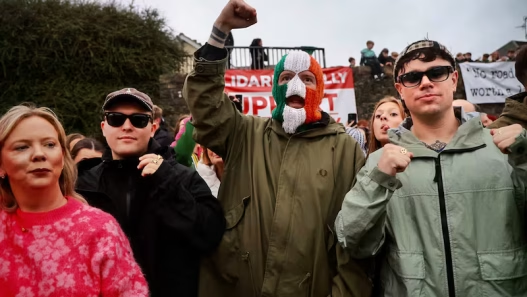
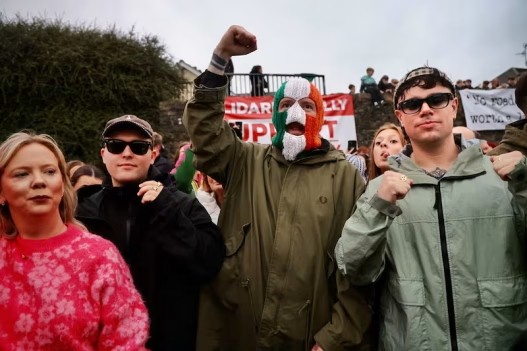
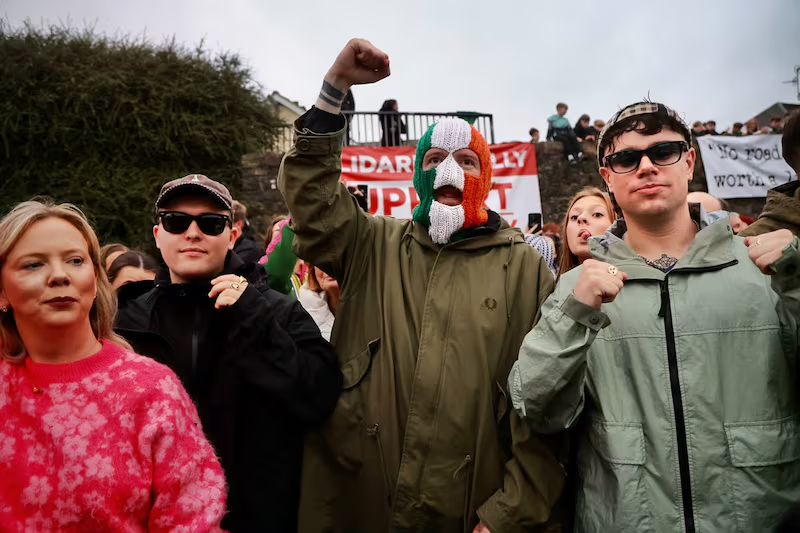
- On Sunday September 27th, large numbers of residents blocked the road before the parade was due to start, police did not force the march through, and the Orange Order has kept a presence at Drumcree Church, about a mile away. The legal permission for the parade expired at midnight that night.
- Bryant hosted talks at Hillsborough Castle between the Portadown District of the Orange Order and the Garvaghy Road Residents’ Coalition, which ended without agreement on Thursday October 1st. He said it was “the end of these conversations”, but that his door remained open.
- On Monday October 5th, the Court of Appeal heard a fresh challenge from the residents and reserved its judgment, with the judges saying a date can’t yet be given.
Why Drumcree matters
The Drumcree dispute is one of the most polarising parading disputes in Northern Ireland’s history. Orangemen from Portadown have marched to and from Drumcree Church on the Sunday before the Twelfth of July since 1807. Part of the return route runs along the Garvaghy Road, which became a mainly Catholic and nationalist area, and residents see the parade as sectarian and triumphalist. The Orange Order sees the ban as an attack on its tradition and civil and religious liberties.
♡ Nialler9 is independent and reader-supported. Support us on Patreon →
In the mid-1990s it brought violence across Northern Ireland, with residents blocking the road in 1995, police forcing the march through in 1996 and 1997, and rioting in nationalist areas. The Parades Commission has banned the Garvaghy Road section since 1998, the year three young Quinn brothers were killed in a loyalist arson attack in Ballymoney during the Drumcree tensions, and things have been relatively calm since 2001. That’s why this autumn’s ruling is so charged, particularly as the commission based it significantly on a PSNI assessment that the march wouldn’t cause major public order problems, a judgment Sinn Féin called “madness”.
The two sides see the legal position very differently. Jamie Bryson, legal adviser to Portadown District, has said that if the Court of Appeal upholds the Parades Commission’s determination, both sides should commit to accepting the law and walk away. Breandán Mac Cionnaith of the Garvaghy Road Residents’ Coalition says there is “no such thing as half a march” and that forcing it through could be catastrophic. First Minister Michelle O’Neill, who backs the residents, says the law is “wrong”.
The musicians
Music has been central to the protest from the start. Huartan played a session on the road as the protest began, saying artists have a responsibility in moments like this. Beoga performed for residents in a tent on the evening of Wednesday September 30th, The Mary Wallopers played for a large crowd the following afternoon, and Kneecap visited on Sunday October 4th, meeting residents and walking the road with Mac Cionnaith without performing. In their statement, Kneecap said the attempt to change things after 28 years of peace “isn’t about rights”
Niall Byrne is the founder of the most-influential Irish music site Nialler9, where he has been writing about music since 2005. He is the co-host of the Nialler9 Podcast and has written for the Irish Times, Irish Independent, Sunday Times, Totally Dublin, Cara Magazine, Red Bull and more. Niall is a DJ, co-founder of Lumo Club, event curator, Indie Sleaze club promoter, and producer of gigs and monthly listening parties & events in Dublin.