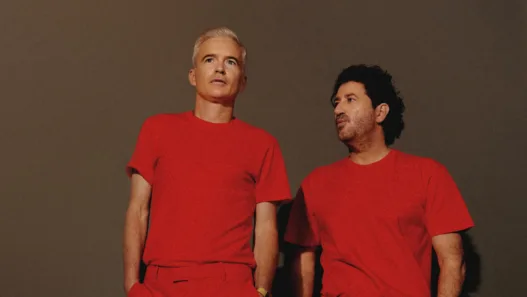

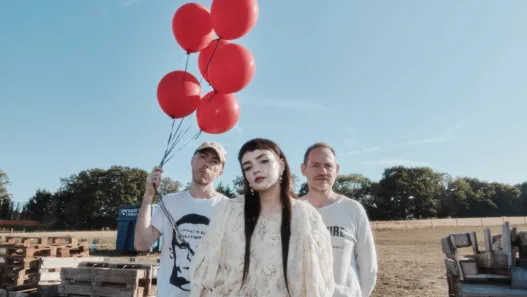


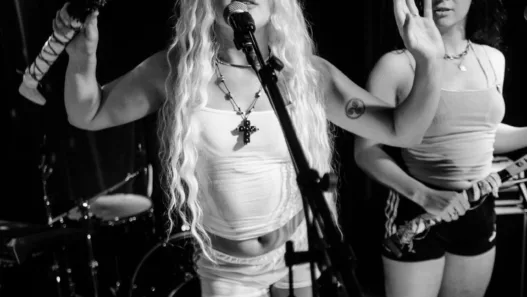
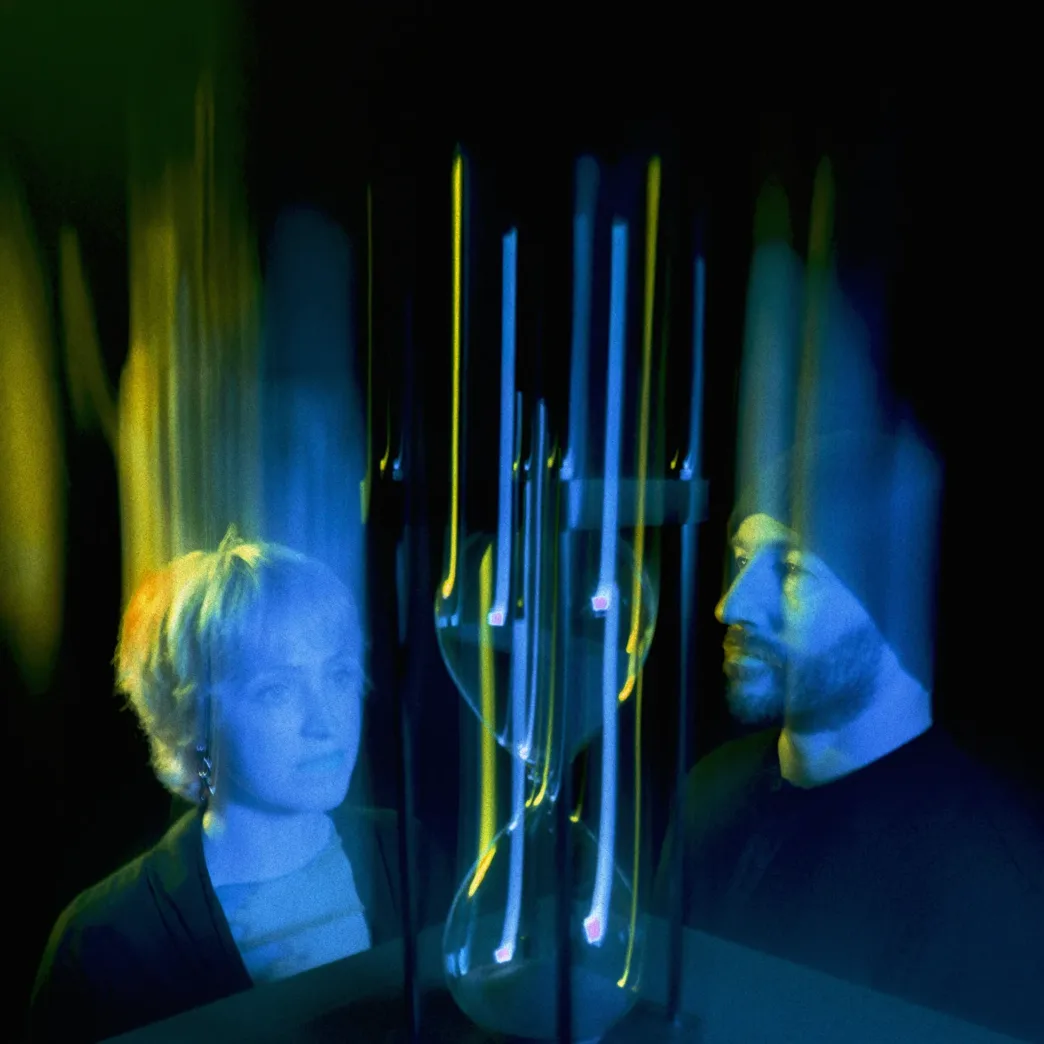
Time Will Kill is the fourth album from Irish alt-rock duo HAVVK, Julie Hawk and Matt Harris, who have spent the better part of a decade building one of the most singular grungy guitar sounds in Irish music.
Their previous albums have moved between weighty, riff-led intensity and stripped-back vulnerability. Time Will Kill is the kind of fourth album that sounds like a band growing fully into the noise and intimacy they have been carrying for years.
“We wanted to make something that addressed the feeling we both had that time is always running out”, members Julie Hough and Matt Harris explain. “Whether it is small trivial tasks that you don’t have time to finish, things you are passionate about that you don’t have time to fully explore, or things you see in the world that you want to try to help with but can’t find a way to prioritise to the point you feel like you are making a difference.”
“There’s so much that feels like it is going backwards in the world at the moment both close to home, with nationalistic movements in Ireland and the UK but also one global geopolitical crisis after the other. We have both felt a sense of guilt putting time into our personal interests while all of this is going on. These tracks are about working through that feeling in different ways; pausing and asking yourself, how are you actually using that time, whose pockets are you lining, and who are you actually looking out for?”
Here are Matt and Julie on each track on the album.
♡ Nialler9 is independent and reader-supported. Support us on Patreon →
- Happening Again
Matt: We both had different musical ideas that we stuck together for ‘Happening Again.’ The song looks at repeated destructive patterns of behaviour over time that you can’t seem to shake or get under control. We opened and closed the song with the same musical idea, coming around full circle at the end to capture the feeling of dread and realisation that you’ve done it again.
2. On Time
Julie: This song is about the endless lists of goals and resolutions we make for ourselves, many of them which have arbitrary deadlines attached to them. I think the older I get, the more I realise that you have to pick and choose the things and people that you put your energy into, and that there will simply never be enough time to do all of things without it all coming crashing down on you. ‘On Time’ is trying to capture that feeling of being right on the crest of a wave of busyness, the ‘last wave’ where you think surely it will be calm seas after this. But there’s always another and another.
3. Bad Look
Julie: ‘Bad Look’ is about looking back and romanticising a simpler time in life when you had fewer responsibilities and consequences; remembering flashes of parties, crushes, stupid fights. We all inevitably paint these memories in potential and poignance, and I think there’s a beauty in trying to rekindle that sense of youth and opportunity, even briefly. The song is about, probably unrealistically, comparing your current life to those memories and asking what can you let go of in order to regain some of that sense of freedom again.
4. Crush
Julie: ‘Crush’ is about a feeling of being in your own way, of not changing your situation but desperately wanting to break a cycle of being stuck. In my mind, the song takes on the song takes place in a house that you cannot leave. You walk from room to room, you gather dust, and you’re aching to leave but it feels impossible to open the door and walk out.
5. You Always
Julie: You Always is about filling your life with distractions and people pleasing rather than focusing on what you need want or need to solve in your own life.
6. The Last
Julie: The Last is about a moment of pure human connection that you never want to forget and that sparks a powerful partnership that can weather time. For me, the reality of strong friendships and relationships is that they are rarely about that one memory. They are about continuously fighting for each other and what life throws at you. But sometimes, just remembering that stupid, beautiful, vulnerable moment can be cenough to keep you tethered in a crisis.
7. Pick Your Poison
Matt: This is about constantly being asked to pick sides and commit to things before we really understand what they are or have had time to be informed. It feels to me that a lot of social media is full of debate complex issues but doesn’t provide any kind of platform for measured or informative discussion. This song tries to sum up being in that environment and not knowing how to respond.
8. Nice To Meet You
Julie: ‘Nice to Meet You’ is about questioning the connections we build around us and asking who is profiting along the way. I find it especially strange to think of how blatantly commodified our time is these days, how easy it is to think of that in terms of engagement, views, clicks, and profits, rather than in memories or conversation. Whether that’s in our personal lives, at work, or in the way we put our music out there, there is a lot of ‘performance’ and ‘contentification’ involved. It’s hard to tell sometimes exactly who it’s for.
9. Idea 21
Julie: So much of the album is about the present – and coming to terms with all of the impact you can make with your time on earth. But ‘Idea 21’ is a sci-fi look into the future. It’s an interrogation taking place long after the devastation of earth and our natural resources, asking who did what, who do we blame, why did we not see this coming?
10. Backwards
Julie: I actually think this song is more relevant now than when we wrote it, which is wild when you think that it was barely a year ago. Backwards is about the re-emerging and rise of intolerance and misogyny. At the time of writing it, it felt more like a reaction to these attitudes still existing but more stealthily. But honestly, the scarier thing now is that is more explicit and out in the open than I remember in years. The access especially to misogynistic content online is especially something I find terrific and hard to wrap my head around.
11. This is It
Julie: ‘This is It’ is about how fleeting the highs and lows of our online realities are. For all the incredible information and connections it brings, it freaks me out that I find myself measuring my life moments, not in how they felt at the time, but in how many other people knew about it, reacted to it; the blurred lines of living in reality verses tiny flashes of online kudos. This isn’t anything new – we need to go out and touch some grass and call our mums. The song is about this dependency on the online world getting to the point that we forget how to use our physical senses and being desperately hungry to retrieve them again.
HAVVK’s Time Will Kill is out now on digital and CD on Veta Records.
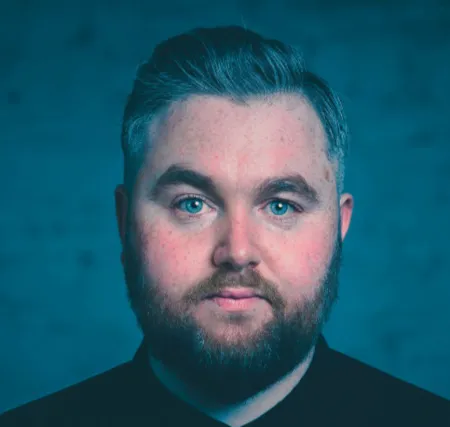
Niall Byrne is the founder of the most-influential Irish music site Nialler9, where he has been writing about music since 2005. He is the co-host of the Nialler9 Podcast and has written for the Irish Times, Irish Independent, Sunday Times, Totally Dublin, Cara Magazine, Red Bull and more. Niall is a DJ, co-founder of Lumo Club, event curator, Indie Sleaze club promoter, and producer of gigs and monthly listening parties & events in Dublin.